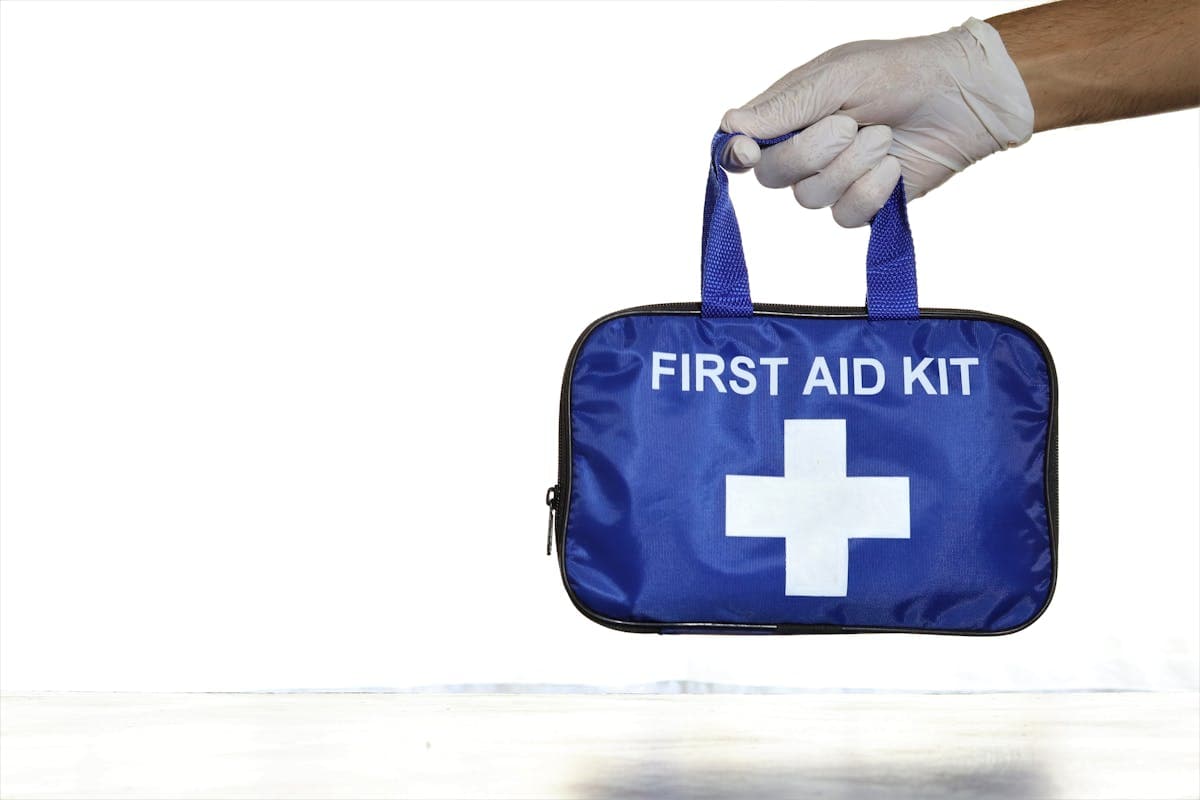
What a car first-aid kit should contain (and what the law says)
Imagine an ordinary Saturday. You are driving to your weekend cottage, the road is empty, your mood is good. Suddenly there is a collision ahead of you – two cars, someone gets out, holding their arm, blood running from a split eyebrow. You stop to help. You open the boot, reach for the first-aid kit and ... you realise that you have actually never looked inside it. You don't know what is in it. You don't even know whether the plasters and dressings have expired.
A car first-aid kit is one of those items we think about exactly when they are needed – and not a moment sooner. That is a shame, because a well-stocked and up-to-date first-aid kit can genuinely help – yourself, your passengers or a complete stranger.
In this article we explain what the law says about a first-aid kit in a car, what it should contain, what is worth adding yourself and how to easily make sure it is always ready to use. Concrete and without beating around the bush.
Is a first-aid kit in a car mandatory?
This is a question almost every driver asks – and the answer is less obvious than it seems. It depends on which country you are in and what vehicle you drive.
Passenger car
Rules differ depending on your country – a car first-aid kit is mandatory in some countries (for example Germany and Austria) and recommended in others. Always check the regulations in force in your country. Regardless of the legal situation, a first-aid kit is widely recommended – and treated as part of responsible, safe travelling.
It is also worth remembering the wider context. Every driver has a legal obligation to provide help to accident victims. Having a first-aid kit means you are actually able to support that help in a real way – and not just call the emergency services and wait helplessly.
Vehicles in which a first-aid kit is required
The situation is different for some vehicles. A first-aid kit is mandatory equipment in, among others:
- buses – carrying a larger number of passengers comes with higher requirements,
- vehicles used for business activity – here a first-aid kit is sometimes required under health-and-safety regulations, in a vehicle treated as a workplace,
- driving-school vehicles and other vehicles with a special purpose.
If you use a company car or use a private car for business purposes, it is worth checking the requirements that apply at your employer's and the current regulations – because here a first-aid kit is often simply necessary.
The DIN 13164 standard – a point of reference
When buying a ready-made car first-aid kit, you will very often come across the marking DIN 13164. This is the German standard that specifies what a first-aid kit in a vehicle should contain. It functions as a commonly used, practical point of reference – manufacturers assemble their kits precisely according to it.
In short: if you buy a first-aid kit compliant with the DIN 13164 standard, you have the certainty that it contains a proven, basic set of dressing materials. It is a good starting point, which it is then worth supplementing with a few things "of your own" – but more on that in a moment.
What should a car first-aid kit contain? Basic equipment
A ready-made first-aid kit assembled according to the standard mainly contains material for treating wounds and securing the casualty. Here is what you will most often find in it – and what it is used for.
Dressing materials
- Sterile dressings – sterile compresses for directly covering the wound.
- Bandages – elastic and knitted, for wrapping and fastening dressings and for stabilising limbs.
- Plasters – with and without a dressing, for minor wounds and abrasions; often also a roll of adhesive tape for fastening dressings.
- Dressing cloth (triangular bandage) – very versatile: for immobilising the arm in a sling, as a large dressing or for fastening.
- Gauze compresses – for cleaning and treating wounds.
Protection and accessories
- Disposable gloves – protect both you and the casualty; never treat someone else's wound with bare hands.
- Rescue blanket (NRC foil) – silver-and-gold foil protecting against heat loss; helps protect the casualty from hypothermia.
- Scissors – for cutting through clothing, a bandage or a dressing.
- Resuscitation face shield – a mask or foil with a mouthpiece for safely carrying out rescue breathing during CPR.
- First-aid instructions – a simple, illustrated cheat sheet; under stress it can be priceless.
Such a set is the absolute minimum. It allows you to treat a wound, stop bleeding, immobilise a limb and secure the casualty until the emergency services arrive. But – like every standard first-aid kit – it has its limitations.
How much does your basket cost?
See how much your basket costs across pharmacies — free, no registration
Compare pricesWhat is worth adding to the first-aid kit yourself?
A typical car first-aid kit is designed as a first-aid set for an accident. You will not find in it the things that come in handy in everyday, less dramatic situations on the road. And those happen far more often than serious accidents.
That is why it is worth assembling your own, additional equipment – and keeping it together with the first-aid kit or in a separate, small pouch in the glove box.
Medicines worth having to hand
- Painkillers and fever reducers – for a headache, toothache or a worse day on the road.
- Medicine for motion sickness – if one of the passengers tolerates a longer drive badly, especially children.
- A remedy for indigestion and heartburn – useful after a meal at a roadside snack bar.
- An anti-allergy medicine – helpful with an unexpected allergy or after an insect sting.
- Medicines taken long-term – if someone in the household takes them permanently, a spare dose in the car for a longer trip is sensible.
Small but useful extras
- A preparation for abrasions and minor cuts – and a larger supply of plasters (those in the first-aid kit run out quickly).
- A wound disinfectant – an antiseptic for washing out a cut.
- Bottled water – for rinsing a wound, an eye or simply for drinking on a hot day.
- Wipes and hand-disinfecting gel – useful in dozens of situations.
- Blister plasters – if you are planning walks or sightseeing on the trip.
- A torch – helpful when treating a casualty after dark or when looking for something in the boot.
Assembling such an additional set is a few items from the pharmacy. Thanks to it, your car first-aid kit stops being merely an "in-case-of-emergency set" and becomes genuinely useful on a daily basis.
A first-aid kit for a longer journey and a holiday trip
When you are planning a longer route – especially with family and with children – it is worth thinking about the first-aid kit a little more broadly than for everyday use. For such a trip the following additionally work well:
- A thermometer – useful when someone on the road starts to run a fever.
- Rehydration preparations (electrolytes) – helpful with diarrhoea or during heat.
- A preparation for insect bites and stings – soothing itching and swelling.
- Eye drops or an eye preparation – for irritation from dust, air conditioning or wind.
- Something for minor stomach complaints – a change of water and food while travelling likes to make itself felt.
- Documentation – if one of the travellers has allergies or chronic conditions, it is worth having basic information about this with you.
When travelling abroad, also remember that access to a pharmacy can be different there than at home – different opening hours, different product names, sometimes the need for a consultation. Assembling a sensible first-aid kit before departure saves nerves on the spot.
Keep an eye on expiry dates – the first-aid kit is not "throw it in and forget it"
This is the most frequently made mistake. The first-aid kit lands in the boot after buying the car and stays there for years – unopened, unchecked. Yet its contents have their own expiry date.
Dressing materials and the NRC foil lose their validity and may stop fulfilling their function – a sterile dressing, for example, no longer guarantees sterility after the date has passed. The medicines you added yourself also expire.
A simple rule: a check once a year
Set yourself one fixed moment in the year for checking the first-aid kit – it is easy to remember if you link it with something you do regularly anyway:
- on the occasion of the car's technical inspection,
- when changing tyres from winter to summer or the other way around,
- at the start of the holiday season, before longer trips.
During the check, verify the expiry dates of all components, replace what has expired or been used up, and top up what is missing. It will take you a few minutes and gives the certainty that, when needed, the first-aid kit will actually work.
Heat in the car and medicines – a brief note
In summer the temperature in a parked car can exceed 50°C. These are conditions that do not suit medicines – high temperature can lower their quality and effectiveness. That is why keeping medicines permanently in the heating-up boot for the whole season is not a good idea.
In practice: dressing materials can stay in the car, but the medicines you add yourself are better taken for a specific journey and not left for months in a heated-up car. This topic is important enough that we have devoted a separate article to storing medicines in summer – take a look at it if you want to learn the details.
The most common driver mistakes – what to avoid
The mere presence of a first-aid kit in the car is only half the success. Here are the mistakes that make the first-aid kit turn out to be of little use at the crucial moment:
- "I'll buy it and forget" – a first-aid kit unopened for years is a first-aid kit with expired contents. A check once a year is a necessity.
- I don't know where the first-aid kit is – if several people use the car, each should know where the first-aid kit is located.
- The first-aid kit buried under luggage – hidden under suitcases in the boot, it is practically useless. Keep it in an easily accessible place.
- Used-up materials without topping up – if you have used plasters or a dressing, replace them right away, not "someday".
- Medicines permanently in a heated-up car – we discussed this above; heat lowers their quality.
- Lack of skills – the best first-aid kit will not help if you don't know how to provide first aid. A first-aid course is an investment that may one day save someone's life.
Frequently asked questions
Is a missing first-aid kit in a passenger car a fine?
Rules differ depending on your country – a car first-aid kit is mandatory in some countries (for example Germany and Austria) and recommended in others. The situation is different in, among others, buses and company vehicles, where it tends to be mandatory. Regardless of the regulations, a first-aid kit is widely recommended – the regulations do change, however, so it is worth following their current state.
Where is the best place to keep the first-aid kit in the car?
In a place that is easily accessible and well known to you – most often in the boot, in a fixed, designated place, or in the glove box. It is important that every person using the car knows where the first-aid kit is, and that it is not buried under other things.
Can I assemble the first-aid kit myself?
Yes. You can buy a ready-made kit compliant with the DIN 13164 standard or assemble the first-aid kit yourself. The most convenient is a mixed approach – a ready-made kit as the base of dressing materials plus your own additions: medicines, antiseptic, a supply of plasters and water.
How often should the contents of the first-aid kit be replaced?
There is no single date for the whole first-aid kit – each component has its own expiry date. That is why it is best to do a check once a year: verify the dates, replace expired and used-up items and top up what is missing.
Should there be medicines in the first-aid kit?
A standard first-aid kit according to the standard is dressing materials, not medicines. Painkillers, motion-sickness or allergy medicines are a valuable addition "of your own" – but remember not to store them for months in a car heated up in summer, and to keep an eye on their expiry dates.
Summary
✅ Rules differ depending on your country – a car first-aid kit is mandatory in some countries (for example Germany and Austria) and recommended in others; in buses and company vehicles it tends to be required.
✅ The DIN 13164 standard is a practical point of reference – a ready-made kit compliant with it contains a proven minimum of dressing materials.
✅ The basis is sterile dressings, bandages, plasters, gloves, a dressing cloth, a rescue blanket, scissors and a resuscitation face shield.
✅ It is worth adding yourself painkillers, a preparation for abrasions, an antiseptic, a supply of plasters and water.
✅ Check the first-aid kit once a year – link the check with changing tyres or the car's technical inspection.
✅ Do not store medicines permanently in a car heated up in summer – high temperature lowers their quality.
✅ A first-aid kit makes sense only when it is up to date and when you know where you keep it and what is in it.
Disclaimer
This information is educational in nature and does not replace knowledge of current regulations or first-aid training. The legal situation regarding vehicle equipment may change – before departure it is worth checking the regulations in force, and in the case of company cars also the employer's requirements. The ability to provide first aid is best gained on a practical course. In the event of an accident, always call the emergency services first.
And remember: a well-stocked first-aid kit is peace of mind on every route – for you, your passengers and the people you can help. And when you are assembling its contents – dressings, plasters, antiseptic, painkillers, a motion-sickness medicine – do not buy everything "along the way" in a single pharmacy. On CheaperForDrug you put the whole basket into the comparison tool and with one click check where, among various online pharmacies, you can assemble it most cheaply. Because real savings appear when you compare the whole basket at once, and not a single product. Safe travels – and a lighter receipt.