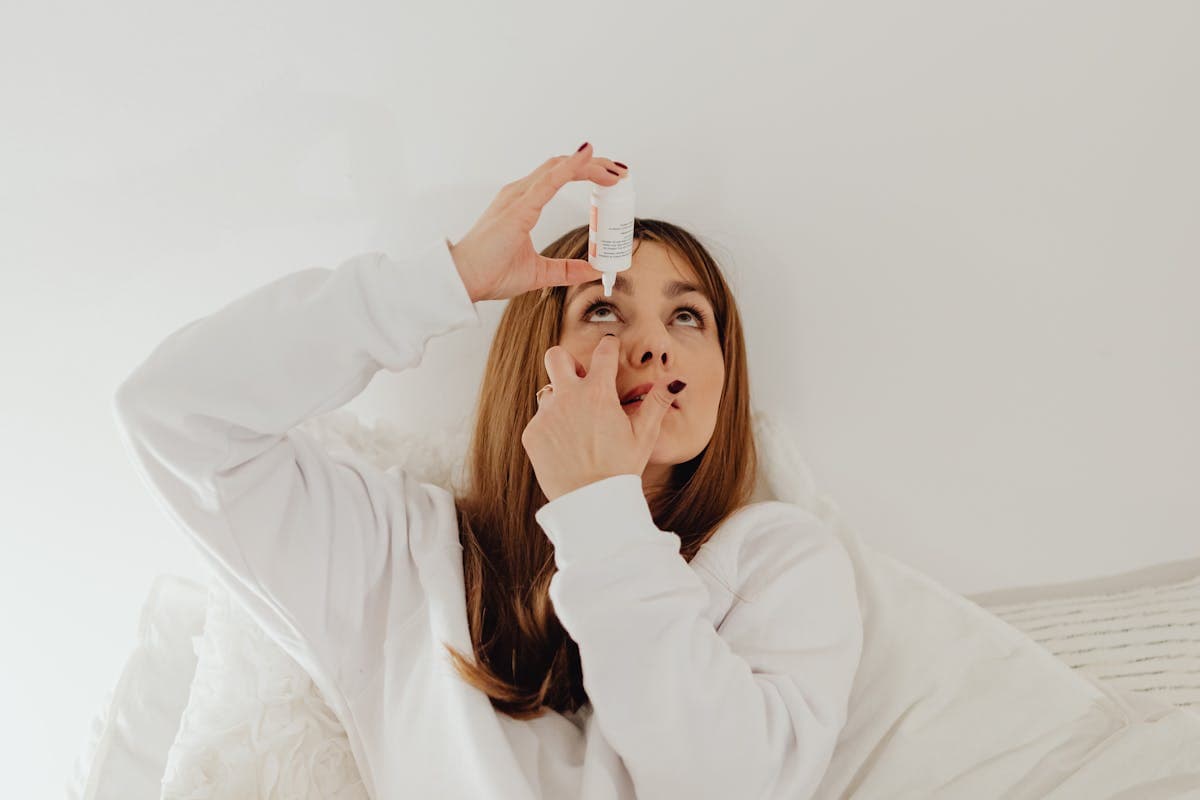
Conjunctivitis in Summer: Pool Water, Allergens, and Which Eye Drops to Choose
You come back from the pool and an hour later one eye starts to sting and turn red. Or after a whole day in the sun and a car ride with the air conditioning running, your eyes are bloodshot, watering, and itching so badly it takes real effort not to rub them. Or perhaps your child wakes up in the morning with lashes glued together and a yellowish discharge in the corner of their eye.
All of these situations are conjunctivitis — one of the most common summer eye complaints. The conjunctiva is a thin, transparent membrane that covers the white of the eye and lines the inner surface of the eyelids. When it becomes irritated or infected, it turns red, burns, and produces extra discharge. It sounds alarming, but in most cases it can be managed at home.
The catch is that "conjunctivitis" is really an umbrella term for several different conditions that look similar but require completely different approaches. What helps with an allergic reaction will do nothing against bacteria. And the "red-eye relief" drops that many people reach for instinctively can actually make things worse. In this article we explain how to recognise which type you are dealing with, which over-the-counter (OTC) drops are right for each case, and — most importantly — when to stop experimenting with drops and see an eye doctor promptly.
Why is conjunctivitis more common in summer?
Summer is a high-risk season for eyes. Several factors tend to act at the same time.
- Chlorine and pool water — chlorinated water washes away the natural tear film and irritates the conjunctiva. Public pools also carry micro-organisms, especially later in the day.
- Sun and UV radiation — intense light and reflections off water or sand irritate the surface of the eye.
- Air conditioning — in cars, offices, shopping centres, and aircraft it dries the air and speeds up tear evaporation. A dry eye is more easily irritated and more susceptible to infection.
- Pollen and allergens — summer is still peak season for grass and weed pollen, as well as dust mites and mould spores.
- Smoke, dust, and wind — campfires, barbecues, dusty roads, strong beach winds — all of these mechanically irritate the conjunctiva.
- Sweat and unwashed hands — in summer we rub our faces more often with our hands, making it easier to transfer micro-organisms to the eye.
That is why someone who rarely has eye trouble in winter can get conjunctivitis several times in a single summer season. The good news: once you know the type, choosing the right response becomes much easier.
The four types of conjunctivitis
Identifying the type is the key to the whole thing. Here are the four most common types and their distinguishing features.
1. Viral conjunctivitis
The most common infectious form. It often accompanies a cold or upper respiratory infection. The typical signs are a watery, clear discharge, a gritty feeling under the eyelid, and redness. It usually starts in one eye and spreads to the other after a few days. It can be highly contagious.
2. Bacterial conjunctivitis
The hallmark is a thick, purulent discharge — yellow or yellow-green. The classic sign is lashes glued together on waking, sometimes so firmly that the eye is hard to open. It often starts in one eye. Also contagious. This is a common scenario in children, especially those in nursery or pre-school.
3. Allergic conjunctivitis
Here itching dominates — eyes itch so intensely that rubbing them feels almost irresistible. Both eyes are usually affected simultaneously, the discharge is watery and clear, and there is often eyelid swelling, tearing, and frequently a runny nose and sneezing. Symptoms flare on contact with the trigger (pollen, pet dander, dust) and the condition is not contagious.
4. Irritant (non-infectious) conjunctivitis
A reaction to a physical or chemical factor: pool chlorine, sun, air conditioning, smoke, dust, cosmetics. The eye is red, stinging, and watering, but there is no pus and no intense allergic itch, and symptoms usually resolve once the irritant is removed. This is a very "summer" type — and often the mildest.
How to tell which type you have
You will not reach a clinical diagnosis at home, and that is not the goal — but a few simple observations can narrow things down considerably. Focus on four things.
Type of discharge
- Thick, purulent, yellow-green, gluing the lashes — points more towards a bacterial cause.
- Watery, clear — fits better with a viral, allergic, or irritant cause.
Itching versus discharge
- Itch dominates (a desperate urge to scratch the eyes) — a strong signal for allergy.
- Pus and glued lashes dominate — points more towards bacteria.
- Burning and a gritty feeling without obvious itch or pus — more often viral or irritant.
One eye or both
- Both eyes from the start, symmetrically — typical of allergy (and irritation, e.g. after swimming).
- One eye first, then the other — more often a viral or bacterial infection.
Associated symptoms
- Runny nose, sneezing, itchy nose — support allergy.
- Fever, sore throat, infectious nasal discharge — suggest a viral infection.
- Clear link to swimming, sun, smoke, or air conditioning — points to irritation.
If after running through this quick checklist you are still unsure — that is perfectly normal, because types can overlap. The simplest next step is to describe your symptoms to a pharmacist, who can help you decide on the right approach, or — if in doubt or if any warning signs appear — to make an appointment with an eye doctor.
Which drops for which type?
Now for the most important part: matching the treatment. At a pharmacy you will find several categories of over-the-counter eye preparations, each with a different purpose. Below we explain what is appropriate for what — at the level of product categories, since the right specific product is always best confirmed with a pharmacist.
How much does your basket cost?
See how much your basket costs across pharmacies — free, no registration
Compare pricesArtificial tears and lubricating drops
The most versatile and safest category. They flush out allergens and micro-organisms, moisturise, and soothe irritation. Excellent for irritant conjunctivitis (chlorine, sun, air conditioning, smoke) and as supportive relief in viral and allergic conjunctivitis — they ease discomfort, though they do not treat the underlying cause.
- If you use drops frequently (several times a day) or wear contact lenses, consider preservative-free formulations — usually in unit-dose vials or bottles with a preservative-protecting dispenser. Preservatives themselves can cause irritation with frequent use.
- This is a good "default" choice for the summer medicine cabinet when the eye is simply bloodshot and irritated.
Antiallergic eye drops
For allergic conjunctivitis (dominant itch, both eyes, runny nose) these are the right tool. At the pharmacy you will encounter several mechanisms of action:
- Ketotifen — antihistamine and mast-cell stabiliser; widely used throughout the allergy season.
- Sodium cromoglicate (cromoglicic acid) — mast-cell stabiliser; works best when taken regularly and preventatively at the start of the pollen season, rather than only once symptoms are in full swing.
- Antazoline (often combined with a decongestant) — an antihistamine used for short-term symptomatic relief of allergic eye reactions.
Which one to choose and how long to use it — ask your pharmacist, because it depends on whether you need acute relief or season-long protection. Oral antihistamine treatment can also be helpful for allergy, but that is a topic to discuss with a doctor or pharmacist.
Decongestant "red-eye" drops — use with caution
Vasoconstrictive drops (the classic "get the red out" products) quickly reduce redness and are tempting for their immediate cosmetic effect. The problem is that they mask the symptom without treating the cause, and when used too long they trigger a rebound effect: once you stop, eyes become even redder, driving the urge to use more. This is the same trap as with nasal decongestant sprays.
- Use them only short-term and for specific occasions, as directed on the label — not as a daily summer ritual.
- If redness persists, that is a signal to find the underlying cause, not to reach for another bottle of "red-eye relief."
Eye-washing solutions
Gentle rinsing (with sterile saline or a dedicated eye-wash solution) helps remove discharge, allergens, and dust particles. It is simple, inexpensive, and safe as a supportive measure for any type of conjunctivitis — particularly useful in the morning to separate glued lashes. Rinse from the outer corner towards the nose, using a separate clean cotton pad for each eye.
What about antibiotics?
Antibiotic drops may be needed for bacterial conjunctivitis, but they are prescription medicines — the decision to use them rests with a doctor. You cannot (and should not) treat purulent conjunctivitis on your own using a leftover antibiotic from the medicine cabinet. If you suspect a bacterial cause (thick pus, pronounced lash-gluing), that is a reason to contact a doctor.
Hygiene and contagion — protect yourself and others
Viral and bacterial conjunctivitis can be highly contagious — spread via hands, shared towels, pillowcases, and touching the eyes. Allergic and irritant conjunctivitis are not contagious. Until you are certain it is "only" an allergy or irritation, treat the situation as potentially infectious.
- Wash your hands frequently, especially before and after touching your eyes or applying drops.
- Do not rub your eyes — it spreads infection from eye to eye and to other people.
- Use your own towel and pillowcase, and wash them often at a high temperature.
- Do not share drops or eye cosmetics — everyone uses their own. Never let the tip of the bottle touch your eye or fingers.
- Stop wearing eye make-up during an infection, and after recovery it is best to replace your old mascara.
- A child with purulent conjunctivitis should generally stay home for a few days — check with your doctor and the nursery or school about when it is safe to return.
Contact lenses in summer
Contact lenses and conjunctivitis are a risky combination — especially in summer.
- With any form of conjunctivitis, remove your lenses and switch to glasses until symptoms have fully resolved. Wearing a lens on an inflamed eye causes discomfort and increases the risk of complications.
- Do not swim in contact lenses — pool, lake, or sea water can carry micro-organisms that are dangerous to the cornea. If you must, wear well-sealed swimming goggles.
- Discard daily lenses after any contact with water; reusable lenses need thorough disinfection with fresh solution — never tap water.
- After an infection, consider replacing your lenses and case before resuming wear, and return to wearing them only once the eye is fully settled — if in any doubt, check with a specialist first.
If you wear contact lenses and the eye suddenly hurts, turns markedly red, or your vision deteriorates — do not wait. In lens wearers, these symptoms require prompt assessment by an eye doctor, as they may involve the cornea rather than just the conjunctiva.
When to see an eye doctor urgently
Most conjunctivitis cases are mild and resolve on their own or with simple symptomatic treatment. There are situations, however, where you should not experiment with drops and should contact a doctor or attend an eye clinic as soon as possible:
- Severe eye pain (not just stinging — real pain).
- Photophobia — light clearly hurts and worsens your symptoms.
- Deteriorating visual acuity, a blurry image that does not clear with blinking.
- Eye injury or suspected foreign body, and any contact of the eye with a chemical substance.
- Thick, copious pus returning despite hygiene measures and rinsing.
- No improvement after a few days of symptomatic treatment, or rapidly worsening symptoms.
- Contact lens wearers with pain, marked redness, or reduced vision.
- Conjunctivitis in a newborn or infant — always a situation for prompt medical assessment, not home treatment.
- People with a weakened immune system or those who have had eye surgery — any eye inflammation is best assessed by a doctor.
These warning signs matter more than identifying the exact type of conjunctivitis. It is better to visit an eye doctor unnecessarily once than to miss something more serious hiding behind an apparently "ordinary" case of conjunctivitis.
Common questions
Will conjunctivitis clear up on its own?
Irritant conjunctivitis usually resolves once the trigger is removed (for example when you leave the chlorinated water), with lubricating drops as support. Mild viral conjunctivitis often settles by itself within a week or two, though it can be bothersome and contagious. Allergic conjunctivitis recurs on exposure to the allergen. Bacterial conjunctivitis (thick pus) and any warning signs require a doctor's assessment.
Which drops for conjunctivitis after swimming?
If the eye is simply bloodshot and irritated from chlorine, lubricating drops (artificial tears) and a gentle rinse are usually enough. Rinsing your eyes well after leaving the pool and wearing goggles while swimming also help. If pus appears, there is pain, photophobia, or reduced vision — it is no longer "just chlorine," and you should see a doctor.
Can I wear contact lenses with conjunctivitis?
No. Switch to glasses for the duration of the conjunctivitis and return to lenses only when the eye is fully calm. After an infection it is worth replacing your lenses and case. And if pain or reduced vision develops while wearing lenses — see an eye doctor promptly.
How do I tell allergy from an eye infection?
The simplest guide: intense itch and both eyes affected at once, often with a runny nose, points to allergy; thick pus, glued lashes, and one eye affected first points more to an infection. This is a rough guide — types can overlap, so if in doubt ask a pharmacist or doctor.
Are "red-eye relief" drops safe?
Used short-term for specific occasions, yes — follow the label. The problem arises with prolonged daily use, which risks a rebound effect: eyes turn even redder after stopping the drops. If you feel the urge to use them every day, that is a sign to find the actual cause of the redness rather than just masking it.
Is conjunctivitis treated the same way in children?
In children, a bacterial cause (pus, glued lashes) is particularly common. Good hygiene and rinsing help, but leave the choice of treatment and any decision about antibiotics to a doctor. In a newborn or infant, any eye inflammation is a reason for prompt medical review — do not delay and do not treat a young child with adult drops on your own.
Summary
✅ Summer raises the risk of conjunctivitis — pool chlorine, sun, air conditioning, smoke, and pollen all irritate eyes, often all at once.
✅ There are four main types — viral, bacterial, allergic, and irritant — and each requires a different approach.
✅ You can identify the type by four things — the nature of the discharge, itching versus pus, one eye or both, and associated symptoms.
✅ Match the drops to the type — artificial tears for irritation, antiallergic drops (ketotifen, sodium cromoglicate, antazoline) for allergy, and rinsing as supportive care in every case.
✅ Do not overuse "red-eye relief" drops — they mask a symptom and risk rebound redness; antibiotics require a prescription for bacterial cases.
✅ Watch hygiene and contagion — wash your hands, do not rub your eyes, use separate towels, and take out your contact lenses for the duration of any eye inflammation.
✅ See an eye doctor urgently for severe pain, photophobia, reduced vision, injury, heavy pus, lack of improvement, contact lens complications, or any eye problem in a newborn.
Disclaimer
This article is intended for educational purposes only and does not replace advice from a doctor, pharmacist, or ophthalmologist. The classification of conjunctivitis types and the guidance on eye drops are general orientations — symptoms can overlap, and some eye conditions look like conjunctivitis yet require urgent treatment. If you experience severe pain, photophobia, deteriorating vision, an eye injury, symptoms in a newborn, or problems as a contact lens wearer, contact a doctor or eye clinic without delay. Read the package leaflet before using any product and follow its instructions, or consult a pharmacist.
One practical note to finish. A summer eye-care kit typically covers a few items at once: lubricating drops (preferably preservative-free), a rinsing solution, and — for allergy sufferers — antiallergic drops for the whole season. Bought individually from different pharmacies, these can vary surprisingly in price. Rather than comparing products one by one, add the whole set to a basket on CheaperForDrug — with a single click you can see the total cost across various online pharmacies and find out where the entire basket comes out cheapest. Real savings come from comparing the total basket price, not a single bottle. Here is to a healthy, comfortable summer for your eyes.