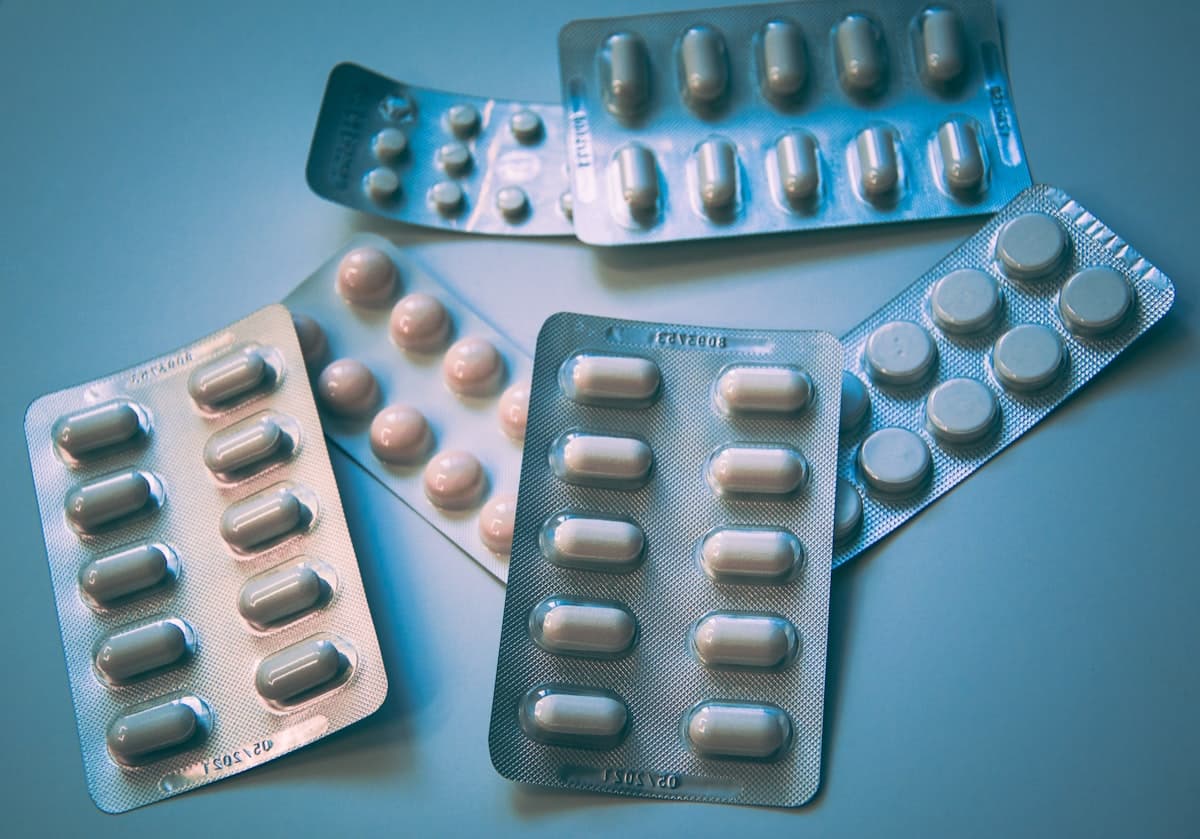
Drug-Supplement Interactions: What Not to Combine
Imagine this scenario: You're taking medication for depression. It was working great for months. Suddenly it starts working less well. Your mood deteriorates, symptoms return. You go to the doctor. "Maybe we need to increase the dose?" the doctor wonders. But then asks: "Are you taking any supplements?" You answer: "Yes, St. John's wort tea for relaxation." The doctor nods. "That's the problem."
St. John's wort - an innocent-looking plant - accelerates the metabolism of many medications in the liver. Your body breaks down the antidepressant faster than it should. The result? The medication stops working. And you had no idea anything was wrong.
That's just one example. There are far more interactions between medications and supplements. And some can be truly dangerous. Today we'll have an honest conversation about what not to combine, why and how to protect yourself.
What are drug-supplement interactions?
An interaction is a situation where one substance (medication, supplement, food component) affects how another works. It can:
- Enhance the medication's effect - sounds good? Not always. Too strong an effect can lead to overdose and side effects.
- Weaken the medication's effect - the medication stops working, the disease progresses.
- Trigger new, unwanted effects - e.g. bleeding, heart rhythm disturbances, kidney problems.
The worst part? You often don't feel it straight away. Interactions can work insidiously - slowly, imperceptibly, over weeks. And by the time you realise something is wrong, it may be too late.
St. John's wort - beautiful plant, dangerous interactions
Let's start with the king of interactions. St. John's wort (Hypericum perforatum) is a popular plant used for mild depression, anxiety and sleep problems. Available without prescription in pharmacies and health food shops. It seems harmless - after all, it's just a herb, right?
The problem: St. John's wort activates liver enzymes (cytochrome P450) that metabolise medications. In practice, this means the body breaks down and eliminates medications faster. The result? Lower drug concentration in the blood = weaker effect = lack of efficacy.
Which medications does St. John's wort interact with?
The list is long and alarming:
- Hormonal contraception - can fail! Increased risk of pregnancy.
- Antidepressants (SSRIs, SNRIs) - risk of serotonin syndrome (dangerous!).
- Anticoagulants (warfarin) - reduces efficacy, increases risk of blood clots.
- Immunosuppressants (post-transplant) - can lead to organ rejection!
- HIV medications (protease inhibitors) - reduces treatment efficacy.
- Cancer medications (many chemotherapy drugs) - can lower treatment effectiveness.
- Digoxin (heart medication) - reduces concentration, heart may function worse.
- Statins (cholesterol medications) - reduces efficacy.
- Antiepileptic drugs - can lead to seizures.
- Theophylline (asthma medication) - reduces efficacy.
Simple rule: If you take any prescription medication - don't use St. John's wort without consulting your doctor or pharmacist. This is not a joke.
Vitamin K - the enemy of anticoagulants
If you take warfarin (Coumadin) - a blood-thinning medication - vitamin K is your adversary.
Why? Warfarin works by blocking vitamin K - essential for blood clotting. If you suddenly increase your vitamin K intake (from diet or supplements), you'll weaken warfarin's effect. Blood will clot too quickly. Risk: blood clots, embolism, stroke.
Where is vitamin K found?
- Green leafy vegetables (kale, spinach, broccoli, cabbage, lettuce)
- Green tea
- Vegetable oils (soybean, rapeseed)
- Multivitamin supplements (check the composition!)
What to do?
- Don't avoid vitamin K entirely - that's impossible and unhealthy
- Eat consistently - don't drastically change your diet. If you've always eaten spinach twice a week - keep doing so. If you haven't - don't suddenly start eating it daily.
- Don't supplement vitamin K - unless your doctor specifically tells you to
- Regularly check your INR (clotting indicator) - your doctor will adjust the warfarin dose
Important: Newer anticoagulants (rivaroxaban, apixaban, dabigatran) don't interact with vitamin K. But they have other interactions - always consult your doctor.
Calcium, magnesium, iron - they block medication absorption
These minerals are great for health. But they have one drawback - they form chelates (chemical complexes) with many medications. The result? The medication isn't absorbed from the gut. Its effect weakens or disappears.
Which medications are affected?
Antibiotics (tetracyclines, quinolones):
- Doxycycline, tetracycline + calcium, magnesium, iron = reduced absorption
- Ciprofloxacin, levofloxacin + calcium, magnesium, iron, zinc = reduced absorption
Thyroid medications (levothyroxine):
- Calcium, iron, magnesium - all block absorption
- Minimum 4-hour gap!
Bisphosphonates (osteoporosis medications):
- Alendronate + calcium = reduced absorption (but you need calcium for bones!)
- Solution: bisphosphonate in the morning on an empty stomach, calcium in the evening
How to avoid the problem?
- Time gap: Take the medication 2-4 hours before or after mineral supplements
- Don't take medications with milk (it contains calcium) - water is fine
- Read the leaflets - some medications must be taken on an empty stomach, others with food
- Ask your pharmacist - they'll ask about all your medications and supplements and advise the optimal schedule
Folic acid and methotrexate - a dangerous duo
Methotrexate is a medication used for rheumatoid arthritis, psoriasis and certain cancers. It works by blocking folic acid metabolism.
The problem: If you take high doses of folic acid (above 5 mg daily), you can weaken methotrexate's effect. The disease may progress.
How much does your basket cost?
See how much your basket costs across pharmacies — free, no registration
Compare pricesBut note: Doctors often deliberately prescribe folic acid to patients on methotrexate - small doses (1-5 mg daily) reduce side effects (nausea, mouth ulcers) without weakening the medication's effect.
What to do? Don't supplement folic acid on your own if you take methotrexate. Your doctor will determine the appropriate dose.
Grapefruit juice - a trap in a glass
Grapefruit juice (and the fruit itself) contains substances that block liver enzymes that break down medications. The result? The medication accumulates in the body, reaching dangerously high levels. Risk of overdose and side effects.
Which medications are affected?
- Statins (cholesterol medications) - especially simvastatin, atorvastatin. Risk: muscle pain, rhabdomyolysis (muscle breakdown).
- Calcium channel blockers (blood pressure medications) - felodipine, nifedipine. Risk: dangerously low blood pressure, dizziness.
- Immunosuppressants - ciclosporin, tacrolimus. Risk: kidney damage.
- Some anti-anxiety medications - buspirone, midazolam.
- Some heart medications - amiodarone.
How long does the effect last? Up to 24 hours! It's not enough to skip the juice in the morning and take the medication in the evening.
Solution: If you take any of these medications - give up grapefruit entirely. Other citrus fruits (oranges, tangerines) are safe.
Aspirin + anticoagulant supplements = bleeding
Aspirin (acetylsalicylic acid) in low doses is used as a blood-thinning (antiplatelet) medication. It reduces the risk of heart attack and stroke.
The problem: If you combine aspirin with supplements that also affect clotting, the risk of bleeding rises dramatically.
Which supplements are risky?
- Omega-3 (fish oil) - in very high doses (above 3-4 g EPA+DHA daily) may increase bleeding risk
- Vitamin E - in high doses (above 400 IU) has anticoagulant effects
- Garlic (extracts) - affects blood platelets
- Ginger (high doses) - has anti-inflammatory and antiplatelet effects
- Ginkgo biloba - increases bleeding risk
- Turmeric/curcumin - in very high doses may affect clotting
What to do?
- If you take aspirin (or other anticoagulants) - consult your doctor about all supplements
- Moderate omega-3 doses (1-2 g daily) are probably safe, but ask your doctor
- Avoid combining multiple anticoagulant supplements at once
- Watch for signs of bleeding: bruising, nosebleeds, blood in urine/stool - see a doctor immediately
SSRIs (antidepressants) + 5-HTP, tryptophan = serotonin syndrome
SSRIs (selective serotonin reuptake inhibitors) are popular antidepressants: fluoxetine, sertraline, escitalopram, paroxetine. They work by increasing serotonin levels in the brain.
The problem: If you add supplements that also increase serotonin (5-HTP, tryptophan), you can trigger serotonin syndrome - a life-threatening condition.
Symptoms of serotonin syndrome:
- Anxiety, agitation, confusion
- Rapid heartbeat, high blood pressure
- Dilated pupils
- Sweating, chills, fever
- Trembling, muscle stiffness, seizures
- Nausea, vomiting, diarrhoea
In severe cases it can lead to coma, organ failure, death.
What to do?
- Don't combine SSRIs with 5-HTP or tryptophan - never on your own
- Avoid St. John's wort (it also increases serotonin)
- Be careful with tramadol (a painkiller - also increases serotonin)
- If you experience worrying symptoms - see a doctor immediately
Diuretics + potassium = hyperkalaemia
Some diuretics (potassium-sparing diuretics: spironolactone, amiloride) retain potassium in the body. This is a good thing, because other diuretics flush it out.
The problem: If you additionally supplement potassium, its level in the blood can become too high (hyperkalaemia). This is dangerous for the heart - it can lead to rhythm disturbances, even cardiac arrest.
Symptoms of hyperkalaemia:
- Muscle weakness
- Heart rhythm disturbances
- Nausea
- In severe cases: paralysis, cardiac arrest
What to do?
- If you take potassium-sparing diuretics - don't supplement potassium without consulting your doctor
- Also be cautious with potassium salts (table salt substitutes)
- Regularly check blood potassium levels (your doctor will order tests)
How to avoid interactions - practical rules
1. Always be honest with your doctor and pharmacist
When the doctor asks: "Are you taking any medications?", don't just mention prescription ones. List everything:
- Prescription medications
- Over-the-counter medications (e.g. painkillers, cold remedies)
- Dietary supplements (vitamins, minerals, herbs)
- Natural products (herbal teas, plant extracts)
- Medications used occasionally (e.g. erectile dysfunction drugs, sleep aids)
Your doctor won't judge you. But they need to know in order to protect you.
2. Keep a list of your medications and supplements
Write down (on your phone, in a notebook):
- Name of medication/supplement
- Dosage
- How often you take it
Show this list to every doctor you visit. Especially if you end up in the emergency department.
3. Ask your pharmacist before buying a supplement
Pharmacists are medication experts. Ask: "I'm taking medication X. Can I safely take supplement Y?" The pharmacist will check the interaction database and give you an honest answer.
4. Read the leaflets
In the "Interactions" section you'll find a list of medications, supplements and foods that can interact. Don't skip this part.
5. Maintain time gaps
Many interactions can be avoided by spacing out medications and supplements. Example:
- Levothyroxine (thyroid) - morning on an empty stomach, 30 min before breakfast
- Calcium - evening, before bed
- Antibiotic (quinolones) - at lunchtime, minimum 2 hours from calcium
6. Don't combine blindly
If you read online that "magnesium helps with...", don't start taking it immediately. First check whether it conflicts with your medications. Ask your pharmacist.
7. Be cautious with herbs
"Natural" doesn't mean "safe". Herbs are powerful biologically active substances. St. John's wort, garlic, ginkgo, ginseng - all of them have interactions.
When to see a doctor immediately?
If after starting a new supplement you notice:
- Your medication has stopped working (disease symptoms return)
- New, worrying symptoms (dizziness, weakness, heart rhythm disturbances)
- Bleeding (bruises, nosebleeds, blood in urine/stool)
- Overdose symptoms (e.g. blood pressure too low from hypertension medication)
- Confusion, disorientation, trembling
Don't wait. See a doctor or call emergency services.
Frequently asked questions
Do all supplements interact with medications?
No. Many supplements are safe. But some (St. John's wort, garlic, ginkgo, high doses of vitamins and minerals) can cause problems. Always consult your pharmacist.
Can I drink herbal tea if I take medications?
It depends on the tea. Chamomile, lemon balm - probably safe. St. John's wort, ginseng - risky. Ask your pharmacist about the specific tea.
How long after stopping a supplement can I safely take medication?
It depends on the supplement. St. John's wort - the effect persists for up to 2 weeks. Vitamins and minerals - usually 1-2 days. Ask your pharmacist for specifics.
Do interactions only apply to prescription medications?
No. Over-the-counter medications (e.g. ibuprofen, aspirin, omeprazole) can also interact. Don't underestimate any medication.
Summary - what to remember?
Drug-supplement interactions are real and can be dangerous - don't dismiss them.
St. John's wort is the king of interactions - avoid it if you take prescription medications.
Vitamin K + warfarin = problem - eat consistently, don't supplement.
Calcium, magnesium, iron block medication absorption - maintain a 2-4 hour gap.
Grapefruit juice + statins/blood pressure medications = overdose - give up grapefruit.
Always tell your doctor and pharmacist about all medications and supplements - it's your safety.
Ask your pharmacist before buying a supplement - they can check interactions in the database.
Compare medication and supplement prices - CheaperForDrug will help find the best deals without risking your health.
Disclaimer
This information is educational and does not replace a medical or pharmaceutical consultation. If you have doubts about interactions between your medications and supplements - consult your doctor or pharmacist. Never stop medications prescribed by your doctor without consultation. Never change dosing on your own. The safety of your pharmacotherapy is a priority.
And remember: Supplements can support health - but only when used safely. Medications save lives - but only when they work properly. Interactions can ruin all of this. So ask, check, consult. Your health is too precious to risk.
Health is knowledge + caution. And savings on medications? CheaperForDrug. Take care of yourself wisely - and safely.