Dry Skin and Eczema in Winter: Emollients That Actually Work
TipsNovember 12, 2026·10 min
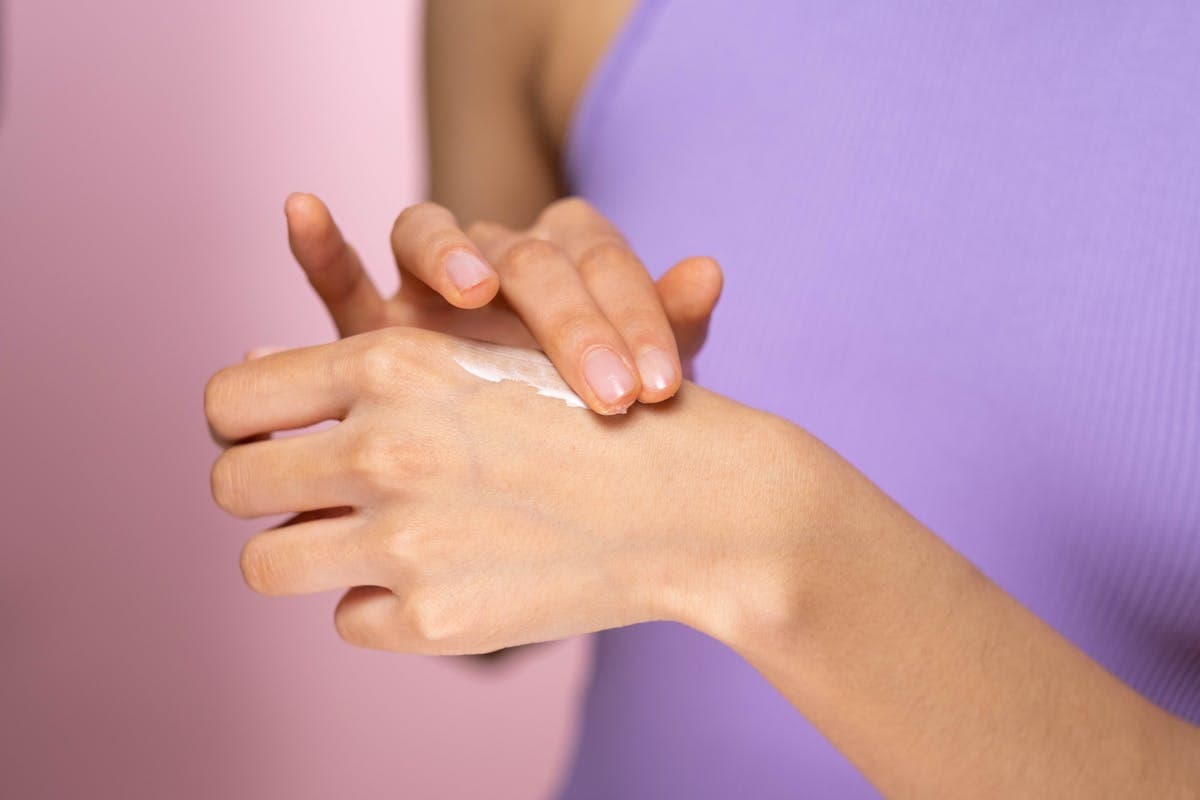
You step out of a warm flat into the cold air and your skin immediately starts feeling tight, burning and itching. Central heating dries the indoor air to the limit, and another hot shower seems to make things worse. If you have dry skin or atopic dermatitis (eczema), winter is the hardest season of the year — and you probably know that better than anyone.
The good news is that a well-chosen emollient routine can dramatically improve quality of life for both adults and children with eczema. The less welcome news is that the market is so flooded with products that it is hard to choose something sensible without understanding the ingredients and how they work. This article clears up the most important questions.
We cover the care of dry and atopic skin using over-the-counter (OTC) emollients and topical preparations. Pharmacological treatment — immunosuppressants, dupilumab, JAK inhibitors — requires a dermatologist and is outside the scope of home self-care.
Why Is Winter So Hard on Atopic Skin?
Eczema involves a structurally impaired skin barrier. Filaggrin — the protein critical for the integrity of the stratum corneum — is reduced or absent. In practice this means the skin loses water far faster than it should (transepidermal water loss, TEWL), and allergens and irritants penetrate more easily into deeper skin layers.
In winter, several unfavourable factors pile up at once:
- Low outdoor temperature — slows epidermal renewal and limits the skin's own lipid production
- Dry, heated indoor air — humidity drops below 30%, causing the skin to lose moisture much faster
- Woollen jumpers and thick fabrics — mechanical irritation and excessive sweating under layers of clothing
- Hot baths and showers — instant relief, but over time they strip the skin's lipid layer
- Less sunlight — lower vitamin D levels, which have a documented role in modulating skin immunity
The result? Eczema flares between November and February are statistically the most frequent and most severe.
What Are Emollients and How Do They Work?
An emollient (from the Latin emollire — to soften) is a preparation that replenishes lipids in the stratum corneum, reduces TEWL and restores proper hydration. It is not just a regular moisturiser — an emollient is meant to act as an external "patch" on a damaged skin barrier.
Three Main Mechanisms of Action
- Occlusion — forming a greasy layer on the skin surface that physically locks in water (petrolatum/Vaseline, mineral oils, squalane)
- Humectants — ingredients that bind water in the epidermis (urea, glycerin, hyaluronic acid, sorbitol)
- Lipid replenishment — ceramides, cholesterol, fatty acids that directly replace the natural lipids of the stratum corneum
The most effective emollients combine all three mechanisms. Products containing only glycerin or only petrolatum are less effective than those with a complex composition.
Ceramides and Urea — Two Key Ingredients
Ceramides
Ceramides are sphingolipids that make up around 50% of the lipids in healthy stratum corneum. In atopic skin their concentration is clearly reduced — which is one of the main reasons the barrier becomes more permeable. Emollients containing ceramides (particularly ceramide NP, AP and EOP combined with cholesterol and fatty acids in a ratio close to natural proportions) effectively rebuild this barrier.
What to look for on the label: ceramide NP, ceramide AP, ceramide EOP, ceramide 1, ceramide 3. Ceramide alone is not enough — the combination with cholesterol and free fatty acids in a roughly 3:1:1 weight ratio is what matters.
Urea
Urea is a natural component of the skin's NMF (natural moisturising factor) — healthy stratum corneum contains around 7% urea. It works in two ways: as a humectant it binds water, and at higher concentrations it has a keratolytic (exfoliating) action.
- 2–5% urea — moisturising, suitable for daily use, including in children over 2 years old
- 10% urea — moisturising and exfoliating, effective for rough skin, dry elbows and heels; avoid on the face and in children under 3 years old
- 20–40% urea — strongly keratolytic, requires professional guidance; not covered here
Note: emollients with urea can sting slightly on application to dry, irritated skin. This is not an allergic reaction — it is an osmotic response. If the stinging is strong or prolonged, switch to a urea-free product until the flare has settled.
Choosing an Emollient: Texture Matters
Not every texture suits every situation. Here is a practical guide:
- Ointment — strongest occlusive effect, best for very dry or lichenified skin; less comfortable during the day (greasy feel); ideal overnight
- Cream — a compromise between effectiveness and comfort; suitable for daytime use; most popular emollients are creams
- Lotion/body milk — lighter texture, convenient for large body areas; weaker occlusive effect; often contains alcohol — check the ingredients before buying for atopic skin
- Bath oil — added to bath water or applied in the shower, forming a protective layer on the skin; good as a supplement, not as the sole product
For children with eczema, dermatologists most often recommend high-lipid creams or ointments — avoid those with long lists of fragrances and preservatives.
The "Soak and Seal" Method — Bathing as Part of the Routine
One of the best-evidenced protocols for atopic skin care is the "soak and seal" technique:
- Bath in lukewarm water (not hot!) for 10–15 minutes — the skin absorbs water and hydrates from within. Water temperature should be around 27–30°C (80–86°F).
- Gently pat dry — soft towel, press rather than rub. The skin should remain slightly damp.
- Apply emollient within 3 minutes of leaving the bath — this is the critical window. Every minute of delay means more water lost.
For washing: avoid regular soaps (alkaline pH damages the skin barrier) and foaming bath products containing SLS/SLES. Choose body wash products labelled "for atopic skin" or "soap-free" (syndet bars, pH 5.5).
How Often Should You Apply Emollient?
This is where many people go wrong — they apply the product once a day and expect results. Clinical research shows that the minimum effective frequency is twice daily, and during an active flare even 3–4 times per day. Quantity matters too: adults with eczema should use around 500 g of emollient per week (whole body), and children around 250 g.
Sounds like a lot? It is. Being stingy with emollient is one of the most common reasons treatment fails.
What to Avoid: Irritants in Skin Care Products
Atopic skin reacts to many ingredients that are completely neutral for healthy skin. The most important ones to avoid:
- Fragrances — both synthetic and natural essential oils (lavender, tea tree, citrus). They are among the most common causes of contact dermatitis. On the INCI label, look for "Parfum" or "Fragrance" — these are warning signs.
- Isothiazolinone preservatives (MI, MCI, methylisothiazolinone) — relatively common sensitisers for atopic skin; found in some wet wipes and wash products
- Lanolin — an effective emollient, but it sensitises around 1–3% of people with eczema; if redness appears after application, switch products
- Ethyl alcohol (ethanol, alcohol denat.) — drying, barrier-damaging and irritating; often found in antibacterial gels and certain toners
- SLS/SLES (sodium lauryl/laureth sulfate) — in wash products; even brief contact with SLS foam can worsen inflammation in people with eczema
- Propylene glycol — at high concentrations can irritate sensitive skin
- Synthetic dyes — rarely necessary in atopic skin preparations, yet they can be an additional contact allergen
A practical rule: the shorter the INCI list, the lower the sensitisation risk. Choose products labelled "hypoallergenic," "dermatologically tested on atopic skin," and always check the actual ingredient list, not just the brand name. Many online pharmacies let you filter products by ingredient — a very useful feature for reactive skin.
Clothing and Environment — An Often-Overlooked Factor
A good emollient will not do much if you spend all day in a wool jumper directly against your skin. A few practical rules:
- Choose cotton or bamboo fabrics directly against the body — avoid wool and synthetic fibres without a cotton layer in between
- Wash clothes in dye-free, fragrance-free detergent, without fabric softener (softeners contain strong fragrances and cationic surfactants that irritate atopic skin)
- Avoid overheating — excessive sweating worsens itching and promotes colonisation by Staphylococcus aureus on atopic skin
- During the heating season, keep the bedroom temperature around 18–19°C (64–66°F) — a cooler bedroom reduces night-time itching
Over-the-Counter Hydrocortisone: When and How?
Hydrocortisone at 0.5–1% concentration is available over the counter in many countries and is sometimes necessary during short-term flares. It is important to use it correctly — both too frequent and too infrequent use produce poor results.
When to Reach for Hydrocortisone?
- Active inflammation: redness, itching, mild swelling — as a short-term way to "dampen" a flare
- The trunk, eyelids and neck — areas where over-the-counter hydrocortisone is safer than stronger corticosteroids
How to Use It?
- Maximum 7 consecutive days (over-the-counter, 1%); longer use requires medical supervision
- Thin layer — only on the affected area, not over the whole body
- Not on a child's face under 2 years old without medical advice
- Once inflammation has settled, return to emollient — hydrocortisone does not replace skin care
What to Avoid?
Do not use hydrocortisone on skin with an active bacterial or fungal infection (characteristic signs: yellow crusts, fluid-filled blisters, noticeable odour). In that case, a doctor's visit is necessary.
When Should You Definitely See a Dermatologist?
Emollients and over-the-counter hydrocortisone have their limits. Book an appointment when:
- Flares return more often than every few weeks despite a regular care routine
- Eczema covers more than 10–20% of the body surface
- A skin infection develops: Staphylococcus aureus (yellow crusts, weeping), herpes (eczema herpeticum — urgent!), or a fungal infection
- A child wakes at night from itching or is not gaining weight adequately
- Current treatment shows no effect after 4–6 weeks
- You want to explore newer therapies: calcineurin inhibitors (tacrolimus, pimecrolimus), JAK inhibitors, dupilumab — all require a prescription and medical supervision
Eczema herpeticum is a medical emergency: if widespread clusters of blistering lesions suddenly appear on eczema-affected skin, accompanied by fever and a significant deterioration in your general condition — go to an emergency department. This is a herpes virus infection on atopic skin and requires antiviral treatment.
Frequently Asked Questions
Can emollients be used in babies and young children?
Yes — emollients free from fragrances and sensitising preservatives are safe from the first weeks of life. Many dermatological societies actually recommend prophylactic use of emollients in newborns at high risk of eczema (parents with atopy). Avoid preparations with more than 2% urea in children under 2 years old — it can irritate delicate skin.
How long does it take to see results from an emollient?
The first noticeable reduction in dryness and itching usually appears after 3–7 days of regular use. Full restoration of the skin barrier takes 4–8 weeks. Emollients are not used in "courses" — in eczema this is a continuous therapy, year-round, with particular intensity in winter.
Are expensive pharmacy emollients more effective than cheaper ones?
There is no simple relationship between price and effectiveness. What matters is the formula, not the brand. Products with ceramides, cholesterol and fatty acids in the right proportions can be either expensive or affordable. It is worth comparing cost per gram rather than pack price — large packs (400–500 ml) are usually much more economical.
Can you use emollient and hydrocortisone at the same time?
Yes, but the order matters: apply emollient first, wait about 15–30 minutes, then apply hydrocortisone to the affected areas. Some protocols recommend the reverse order (corticosteroid first, emollient after absorption) — if in doubt, ask a pharmacist or doctor. Never mix both products in the same palm or dilute hydrocortisone with emollient yourself.
Can supplements help with eczema?
Vitamin D (deficiency is common in winter and correlates with worsening eczema symptoms) and omega-3 fatty acids (fish oil, EPA+DHA) — research suggests a moderate benefit with long-term supplementation. This is a topic for a separate consultation with your doctor, who can test your vitamin D level and determine the right dose. For probiotics: some studies indicate benefits in children, but the evidence is mixed.
Do air humidifiers help with eczema in winter?
Yes — maintaining indoor humidity at 40–60% significantly reduces TEWL and decreases the frequency of flares. This is one of the cheapest and most underrated elements of winter eczema management. The humidifier should be cleaned regularly to prevent it becoming a source of mould or bacteria.
Summary
✅ Apply emollient at least twice a day — less is not enough to effectively rebuild the skin barrier in eczema.
✅ Apply emollient within 3 minutes of bathing — the soak-and-seal method is one of the best-evidenced skin care protocols.
✅ Choose products with ceramides and/or 2–5% urea — these two ingredients are the most effective at rebuilding the barrier and binding water in the epidermis.
✅ Avoid fragrances, SLS and alcohol in skin care products — a short INCI list is your friend with atopic skin.
✅ Use over-the-counter 1% hydrocortisone for a maximum of 7 days and only on active inflammatory lesions — it is a tool for tackling flares, not a substitute for emollient.
✅ Keep indoor humidity at 40–60% — a humidifier is an affordable investment that genuinely helps in winter.
✅ See a dermatologist when flares keep returning despite a consistent routine, or when they cover large areas of the body — the therapies available today are far more effective than they were even a few years ago.
Disclaimer
This article is for educational purposes only and does not constitute medical or pharmaceutical advice. The information in this text does not replace consultation with a doctor or pharmacist. Before starting any preparation — especially in children, pregnant or breastfeeding women, or people with chronic conditions — consult a healthcare professional.
If you use emollients, urea creams or other atopic skin care products regularly, the monthly cost can add up quickly — especially when buying everything from a single pharmacy without comparing prices. On CheaperForDrug you can put your entire skin care basket together and see what the total comes to across various online pharmacies. Real savings come from comparing the whole basket, not just one pack at a time.
How much does your basket cost?
See how much your basket costs across pharmacies — free, no registration
Compare prices