Flu Season Without Overpaying: How to Build Your Medicine Cabinet for Less
September fades, the first cool evenings creep in, and shop windows fill up with scarves and gloves. For most of us it’s a clear sign: flu season is just around the corner. Every year the same story — someone at home catches a cold, you run to the pharmacy for one thing, then another, you pay in several trips and end up spending twice as much as if you’d prepared in advance.
There is a better way. Putting together an autumn-winter medicine cabinet thoughtfully — before anyone falls ill — is one of the most cost-effective things you can do for the whole household. It’s not just about convenience; it’s about real savings: buying everything at once and comparing the price of your whole basket rather than picking up products one by one from the nearest pharmacy can cut your total spend by as much as 30–40%.
In this article you’ll find a concrete product list worth keeping on hand, an explanation of the differences between medicine formats, dosing guidance for adults, warning signs that mean you must see a doctor, and the key insight: comparing prices for your whole basket across various online pharmacies can save you a significant amount over a single season.
What should an autumn-winter medicine cabinet contain?
A well-stocked flu-season medicine cabinet is not a cupboard crammed with random products. It’s a considered list covering specific symptoms. Below are the seven categories worth covering.
1. Fever reducers and pain relievers
Fever and muscle aches are the two first signals that your body is fighting an infection. Your home cabinet should hold at least two products from different active-ingredient groups so you can alternate them when needed.
- Paracetamol (acetaminophen) — available as tablets (500 mg, 1000 mg), dissolvable sachets, and suppositories. Safe for most adults and children; does not irritate the stomach. 1000 mg tablets act for roughly 6–8 hours. Maximum adult daily dose: 4 g.
- Ibuprofen — tablets 200 mg or 400 mg. Acts as a fever reducer, pain reliever, and anti-inflammatory. Do not take on an empty stomach; use with care if you have a history of stomach problems. A good option when fever is accompanied by a severe sore throat or muscle pain.
- Aspirin (acetylsalicylic acid) — effective for pain and inflammation, but do not give to children or teenagers due to the risk of Reye’s syndrome.
It’s worth having both paracetamol and ibuprofen: alternating them every 4 hours allows better control of high fever without exceeding the dose of either one individually.
2. Sore throat remedies
A sore throat often precedes full-blown cold symptoms by 12–24 hours. Your options include:
- Lozenges with a local anaesthetic (e.g. containing lidocaine, benzydamine, or flurbiprofen) — relieve pain for several hours at a time. Available without a prescription.
- Throat sprays with chlorhexidine or octenidine — antibacterial and antiseptic; good for prevention and early-stage infection.
- Syrups and gargles with sage, thyme, or propolis — a gentler, more natural option.
If your sore throat is very severe, does not improve after 3–4 days, or is accompanied by a high fever and white patches on the tonsils — see a doctor, as this may be bacterial tonsillitis requiring an antibiotic.
3. Nasal congestion remedies
A blocked nose is one of the most disruptive symptoms because it affects sleep, eating, and everyday function. Worth including in your cabinet:
- Saline solution or sea-water nasal spray — the first line of defence. Moisturises the mucous membrane, helps clear secretions, safe for the whole family.
- Xylometazoline or oxymetazoline nasal spray — quickly opens up the nose, but use for a maximum of 3–5 days in a row. Longer use can cause dependency and rebound congestion (the mucous membrane swells more after stopping).
- Oral pseudoephedrine — decongestant tablets (often combined with paracetamol) when the congestion reaches the sinuses. Do not use if you have high blood pressure.
4. Cough remedies
A cough can be dry (irritating, unproductive) or chesty (productive, with mucus). Important: do not use cough suppressants (codeine, dextromethorphan) for a productive cough — they block the body’s natural airway-clearing reflex.
- Dry cough: syrups with butamirate citrate or over-the-counter (OTC) dextromethorphan; lozenges with Icelandic moss (cetraria) — a gentle, natural option.
- Chesty cough: mucolytic syrups with acetylcysteine (ACC) or ambroxol — thin the mucus and help you cough it up more easily.
- Saline or hypertonic solution inhalations — especially helpful for throat and tracheal irritation; safe for young children too.
5. Electrolytes
Flu and severe colds often come with fever, vomiting, or diarrhoea, leading to dehydration. Oral rehydration preparations (electrolytes) replace lost minerals and glucose far more effectively than water alone.
- Electrolyte sachets (e.g. Orsalit, Gastrolit, or similar over-the-counter oral rehydration salts) — simply dissolve in water; available in flavours, well tolerated.
- Also available as effervescent tablets or ready-made isotonic drinks — less concentrated but convenient for mild dehydration.
- Remember: electrolytes complement treatment — they are not a substitute for a doctor. Severe dehydration in a child, an elderly person, or someone with a chronic illness requires immediate medical attention.
6. Vitamin D3
Vitamin D deficiency is widespread in Northern and Central Europe, particularly between October and April, when the sun is too low in the sky for the skin to synthesise it. Deficiency weakens the immune system and increases susceptibility to respiratory infections.
How much does your basket cost?
See how much your basket costs across pharmacies — free, no registration
Compare prices- Recommended preventive dose for adults (without blood-test guidance): 1,000–2,000 IU per day; for adults over 65 — up to 2,000 IU.
- Formats: oil drops (best absorption), capsules, tablets — choose whichever you will actually take regularly.
- Vitamin D3 + K2 MK-7 in a combined product — a popular option. Vitamin K2 helps direct calcium to bones rather than arteries.
- For the optimal dose, especially if you have a chronic condition, consult your doctor or pharmacist.
7. Thermometer and accessories
Without a reliable thermometer you cannot properly assess how ill someone is. It’s worth having:
- Non-contact infrared or ear thermometer — fast reading (1–3 seconds), great for children and anyone who can’t hold still.
- Digital axillary/oral thermometer — less expensive, accurate when used correctly (about 15–30 seconds under the arm).
- Cool compresses for the forehead — help bring down fever physically; a cold damp cloth is an old and effective method.
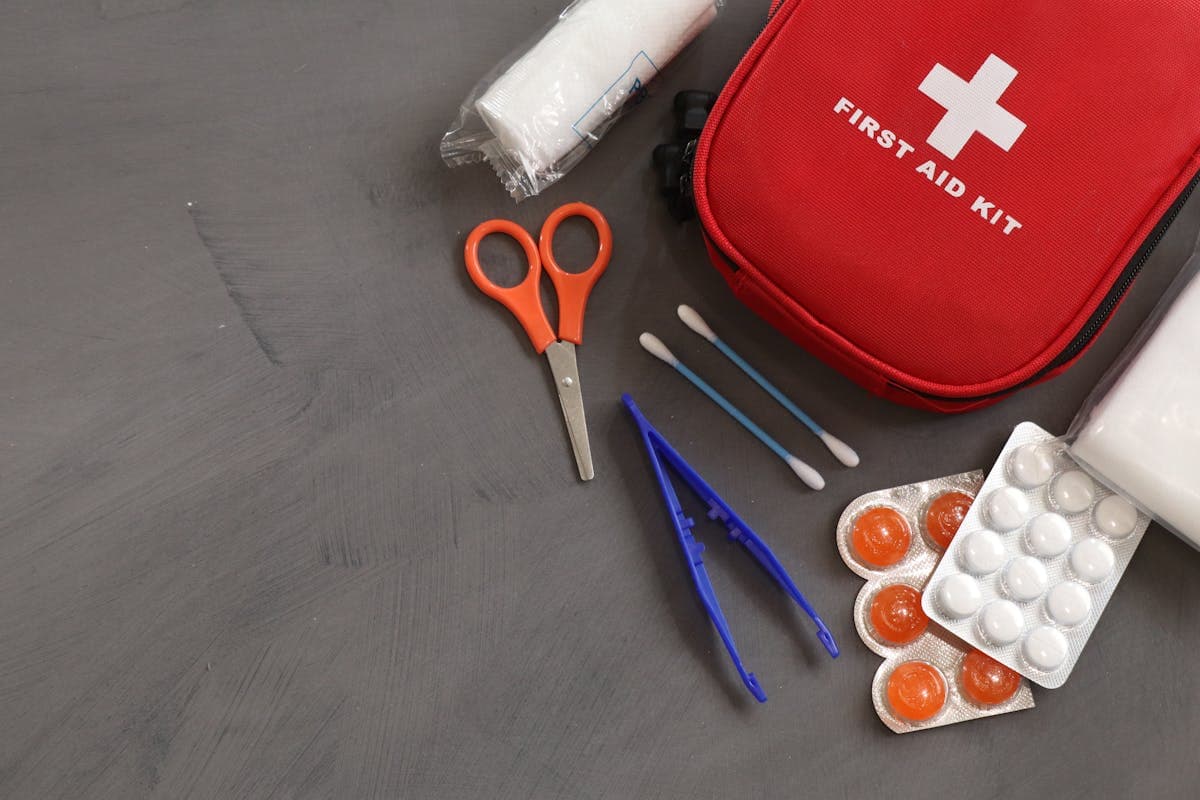
- Plasters and bandages — rarely needed for flu specifically, but they round out a complete cabinet.
When a medicine cabinet is not enough — warning signs
Most colds and mild bouts of flu resolve on their own within 7–10 days. There are, however, signs where you must not delay seeing a doctor:
- Fever above 39.5°C (103°F) in an adult persisting for more than 3 days despite fever-reducing medication.
- Any fever in an infant under 3 months of age — always requires immediate medical attention.
- Shortness of breath, rapid breathing, chest pain — may indicate pneumonia or flu complications.
- Severe headache with a stiff neck and sensitivity to light — a warning sign for meningitis; call emergency services immediately.
- Symptoms lasting more than 10 days or suddenly getting worse — may indicate a secondary bacterial infection.
- Vomiting that prevents keeping down fluids for more than 24 hours — risk of dangerous dehydration.
In any situation where you are unsure: call a doctor or speak to a pharmacist. Your home medicine cabinet is a support tool, not a substitute for diagnosis.
How much does a medicine cabinet like this cost, and where can you save?
Let’s be realistic. Say you’re stocking a cabinet for a two-adult household. A basic kit for one season:
- Paracetamol 500 mg × 20 tablets
- Ibuprofen 400 mg × 20 tablets
- Throat lozenges × 1 pack
- Xylometazoline nasal spray
- Saline nasal spray
- Mucolytic syrup (ambroxol or ACC)
- Electrolytes (10 sachets)
- Vitamin D3 2,000 IU × 60 capsules
- Electronic thermometer
The same basket can vary enormously in price from one online pharmacy to another — the gap often reflects margin, not quality. A paracetamol pack that costs a couple of pounds or euros in one pharmacy may be two or three times that in another, and both are genuine, effective, properly stored products.
The key takeaway: real savings come from comparing the whole basket, not a single pack. If you only check the price of one product, you might find a promotion on that one item while overpaying on the other seven. Comparing your full kit across various online pharmacies at once shows you where the total bill will be lowest.
How to buy medicines online safely
Licensed online pharmacies operate under national pharmaceutical authority permits and offer exactly the same products as physical pharmacies — often at lower prices thanks to lower overheads. A few principles for safe online purchases:
- Verify the pharmacy holds a valid operating licence from the national medicines or pharmacy authority — this is a guarantee of legality.
- Avoid platforms without a physical address and a contact phone number — these are basic requirements of any legitimate online pharmacy.
- Delivery time matters — when stocking your cabinet in advance (not in a rush), next-day or two-day delivery is standard and poses no problem.
- Check expiry dates and return policies — just as you would in a physical pharmacy.
Compare baskets, not individual packs
Here is the most practical advice in this article. Imagine you have a list of 8 products from the kit above and want to buy them as cheaply as possible. There are two approaches:
- The “hunting for deals” strategy: you search for the lowest price on each product separately, in different pharmacies. The result? You pay for several deliveries, spend time on multiple orders, and the total cost often turns out higher than it looked on paper.
- The basket strategy: you add all 8 products to one list and check which online pharmacy has the lowest combined price for the whole kit. One delivery, one invoice, real savings.
The difference in the total basket cost between the cheapest and the most expensive online pharmacy regularly reaches a substantial sum on a kit like the one described above. With a fuller basket (adding a thermometer, larger packs of vitamin D) — potentially even more.
Frequently asked questions
Should I buy the whole kit from one pharmacy, or is it worth splitting the order?
It usually makes more sense to place a single order with the pharmacy that has the best combined basket price. Delivery costs across a split order typically cancel out any savings on individual products. Comparing the basket as a whole lets you see instantly which pharmacies have the best total — without manually calculating dozens of combinations.
Are cheaper Over-the-Counter medicines just as effective?
Yes, provided they contain the same active ingredient at the same dose. Paracetamol is paracetamol — whether you buy a branded product or a pharmacy own-brand. The price difference reflects advertising, packaging, and manufacturer margin, not how well the medicine works. Always check the active ingredient and dose on the packaging, not just the brand name.
When should I start putting the cabinet together to be ready before the season?
Ideally in September or early October — before the first wave of illness hits your household. Online pharmacies still have full stock and normal fulfilment times. In the middle of the season (December to February) popular products can be temporarily out of stock and delivery times stretch.
Is it worth taking vitamin D year-round?
Many specialists recommend supplementation throughout the year, though summer doses can be lower (around 800–1,000 IU) thanks to sun exposure. In autumn and winter (October to April) supplementation is advisable for virtually every adult in Northern and Central Europe due to insufficient sunlight. The optimal dose is best determined by a blood test for 25(OH)D — it’s inexpensive and available at any laboratory.
What should I do with unused medicines after the season?
Do not throw medicines in the bin or flush them down the toilet — they end up in the environment. Pharmacies are required to accept expired or unwanted medicines free of charge. Before each season it’s worth reviewing your cabinet, returning expired products to a pharmacy collection point, and restocking whatever is missing.
Should I keep separate products for children and adults?
Yes, if children are in the household. Children’s paracetamol comes as a syrup or suppositories at lower doses adjusted to body weight. Children’s ibuprofen is available as a syrup or suspension. Never give children adult-strength formulations, split tablets, or estimate a dose — always use products with a clear age indication and follow the leaflet dosage or your doctor’s guidance.
Summary
✅ Build your cabinet before the season — September and October are the ideal window, before shortages and panic buying set in.
✅ Keep two different fever reducers (paracetamol and ibuprofen) — alternating them controls a high fever more effectively without exceeding the dose of either.
✅ Match your cough syrup to the type of cough — mucolytics for a chesty cough, suppressants only for a dry cough, never the other way round.
✅ Electrolytes and vitamin D are underrated cabinet essentials — they have a meaningful impact on how your illness progresses and on your immune resilience.
✅ Know the warning signs — a high fever lasting more than 3 days, shortness of breath, or a severe headache with a stiff neck all require a doctor’s visit, not self-treatment.
✅ Compare the price of the whole basket, not a single product — the gap in the total kit cost between the cheapest and most expensive pharmacy can be substantial.
✅ Buy medicines from licensed online pharmacies — verified, with a visible licence number; they carry the same products as physical pharmacies, often for less.
Disclaimer
This article is for educational and informational purposes only. It does not constitute medical advice or a treatment recommendation. Always discuss dosage, contraindications, and drug interactions with a doctor or pharmacist. In an emergency, or if you have any concerns about your own health or a loved one’s, contact a medical professional immediately — in many countries the single emergency number is 112.
Autumn is a good moment to sit down calmly and put your cabinet together — without rushing or stress. Add your full product list to a basket on CheaperForDrug, compare the total cost across various online pharmacies, and see how much you can save on a single order. Real savings come from comparing the whole basket, not one pack at a time.