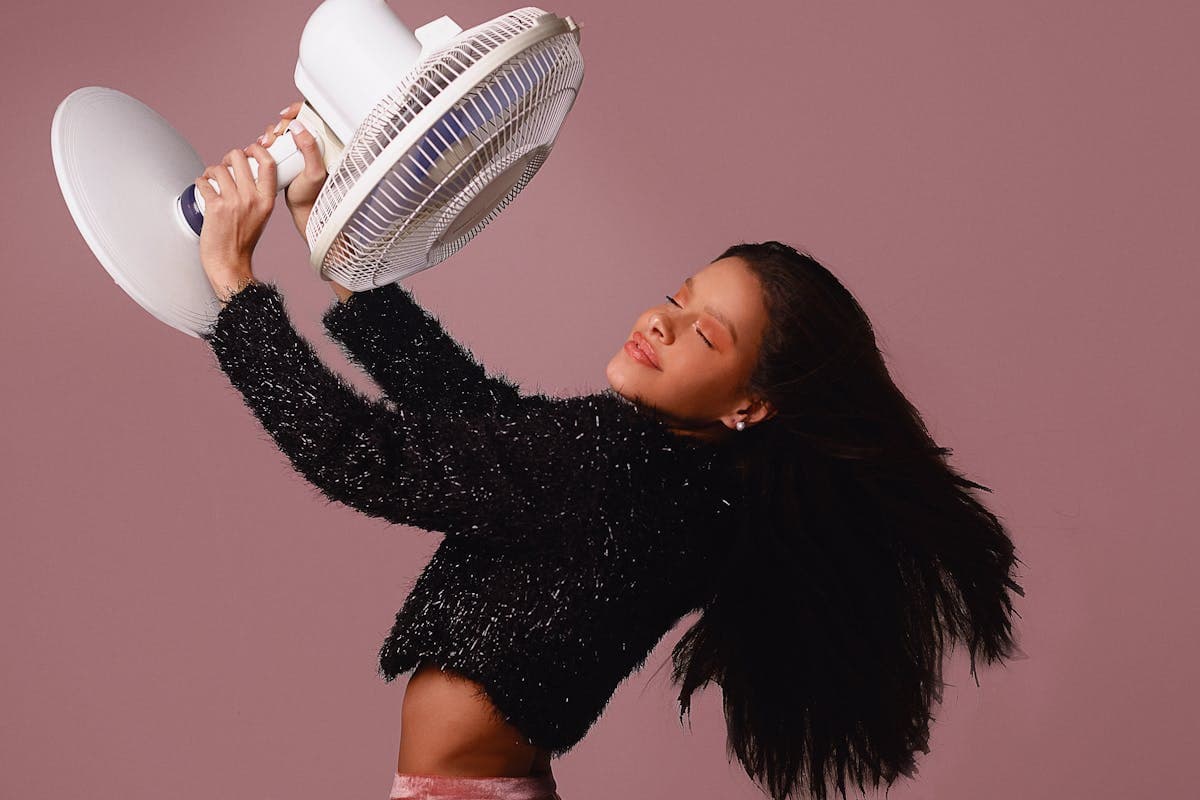
Heat Rash and Prickly Heat: How to Treat It and Who Is at Risk
A scorching day, high humidity, your shirt sticking to your back. In the shower that evening you notice tiny bumps on your neck, the crook of your elbow, or across your back — reddish or clear, sometimes itchy, sometimes just an unpleasant prickling sensation. Nothing painful, nothing that looks alarming — but where did it come from?
It is most likely heat rash — in medical terms miliaria. And although most of us associate it exclusively with babies, the truth is that heat rash can strike anyone: an adult caught in a heatwave, a runner just off a training run, a person lying under a duvet with a fever. Anywhere the skin sweats but the sweat has nowhere to evaporate.
In this article we explain exactly what heat rash is, what forms it takes, who is most at risk and — most importantly — how to soothe it at home and how to tell it apart from an allergic reaction, a fungal infection, or insect bites. We will also be clear about the situations where it is better not to delay seeing a doctor. No scaremongering — just straightforward, practical information.
What is heat rash? A brief look at the mechanism
Heat rash occurs when sweat glands become blocked and the sweat they produce cannot reach the surface of the skin. Instead of evaporating it becomes trapped beneath or just below the skin, forming small blisters and bumps — that is heat rash.
The mechanism is straightforward: the more we sweat, and the harder it is for that sweat to evaporate (because it is hot, humid, and the skin is tightly covered), the greater the chance that sweat-gland ducts will become "plugged." That is why heat rash is a classic problem on hot, muggy days — and in any situation where the body overheats.
The good news: in the vast majority of cases heat rash is harmless and temporary. Once the skin has a chance to cool down and dry out, it typically clears up on its own within a few days. The key to faster recovery is removing the cause — overheating and moisture.
Types of heat rash — not all rashes look the same
Heat rash is classified according to how deep in the skin the blockage occurs. That depth determines its appearance and symptoms.
Miliaria crystallina
The mildest form. The blockage is very shallow, just under the surface of the epidermis. It presents as small, clear, fluid-filled blisters that look like tiny drops of dew. They usually do not itch or hurt, burst easily, and disappear quickly. This type often appears during a fever or after heavy sweating.
Miliaria rubra (prickly heat)
The most common and most uncomfortable form — the one people usually mean when they say "heat rash." The blockage is deeper, within the epidermis, and is accompanied by inflammation. It appears as red papules and blisters that itch or cause an unpleasant prickling, burning sensation — hence the name "prickly heat." This is the type that most often troubles adults in hot weather.
Miliaria profunda
The rarest and most serious form, usually occurring in people who have had repeated bouts of miliaria rubra. The blockage happens deep in the dermis. This produces firmer, flesh-coloured bumps that resemble goose-bumps. They can impair sweating in the affected area, which can be dangerous for thermoregulation during exertion in high heat. This form generally warrants a medical consultation.
Who gets heat rash? Not just babies
There is a persistent belief that heat rash is a "baby thing." It is not. Babies are particularly vulnerable because their sweat glands are not yet fully mature, they overheat easily, and are often dressed too warmly. But heat rash is a condition that affects people of all ages.
The most at-risk groups and situations include:
- Babies and young children — immature sweat glands and a tendency to overheat (too many layers of clothing, rooms that are too warm).
- Adults in hot, humid weather — especially during heatwaves, in stuffy rooms with no ventilation or air conditioning.
- Physically active people and athletes — intensive training, running, cycling, outdoor physical work — anywhere heavy sweating occurs.
- People with a fever — an elevated temperature causes heavy sweating, and lying under a duvet "seals" the skin further.
- People who are overweight or obese — skin folds trap moisture, skin rubs against skin, and sweat evaporates less easily.
- People who wear tight, synthetic clothing — non-breathable fabrics keep sweat against the skin.
- People who are immobile or bedridden — on the back and at pressure points, sweat evaporation is restricted.
In short: anyone who finds themselves in a "hot plus humid plus covered skin" situation can develop heat rash. It is not a matter of age but of conditions.
Where does heat rash typically appear?
Heat rash favours spots where sweat gathers most easily and where the skin struggles to "breathe":
How much does your basket cost?
See how much your basket costs across pharmacies — free, no registration
Compare prices- The back of the neck — a classic location, especially with long hair or tight collars.
- The back and chest — particularly under clothing and in people who are lying down.
- Skin folds — under the breasts, in the groin, under the arms, in the crooks of the elbows and behind the knees.
- The forehead and hairline — where sweat runs most freely.
- The waist and areas under a waistband — where clothing presses and rubs.
How to treat heat rash at home
Treating heat rash rests on one simple principle: cool and dry the skin and stop overheating it. Remove the cause and the skin usually takes care of itself quickly. Here is what genuinely helps.
Cool and air the skin
- Get out of the heat — move to a cooler, well-ventilated room. A fan, air conditioning, or an open window all help.
- A cool (not ice-cold) shower — gently rinse the skin with lukewarm water to wash away sweat and lower your body temperature.
- Dry the skin thoroughly but gently — pat rather than rub. Pay particular attention to skin folds, where moisture tends to linger.
- Cool, damp compresses — a cool compress held briefly on an itchy area can provide relief.
Loose, breathable, cotton clothing
Swap tight, synthetic clothing for loose, breathable, ideally cotton garments. Natural fabrics wick moisture better and let the skin breathe. In hot weather, less is more — the fewer layers, the better for your skin.
Over-the-counter soothing products
Changing conditions is often enough on its own, but when heat rash itches or persists, you can reach for over-the-counter products as a supplement. Remember: these are supportive, not a "magic cure" — cooling the skin is still the foundation.
- Zinc oxide powder or dusting powder — helps dry the skin and reduce friction. Apply to dry skin and use sparingly — excess powder, especially in skin folds, can clump with sweat and have the opposite effect.
- Zinc oxide ointments and pastes — provide a protective barrier, mildly astringent, soothe irritation.
- Soothing emollients and lightweight moisturisers — calming, free of irritants. In hot weather choose light formulations (gels, lotions) rather than thick, greasy creams, which can further clog the skin.
- Products containing panthenol or allantoin — can support the recovery of irritated skin.
Short-term use: low-strength Over-the-Counter hydrocortisone
If miliaria rubra itches intensely, a low-strength hydrocortisone cream or ointment available over the counter can provide short-term relief. It is an anti-inflammatory that eases itching and redness. There are some important rules to follow, however:
- Use it for a short time only and on small areas — as directed on the label.
- Do not use it on young children, on the face, or in intimate areas without first speaking to a doctor or pharmacist.
- If you are not certain of the diagnosis (is it definitely heat rash and not an infection?), ask a specialist first — steroids should not be applied to infected skin.
If you are unsure, a pharmacist can advise whether hydrocortisone is appropriate in your situation and how to use it.
What to avoid
- Scratching — gives momentary relief but damages the skin and opens it up to bacteria (risk of secondary infection).
- Thick, greasy creams and occlusive ointments over large areas — these can further clog the glands.
- Irritating skincare products — heavily fragranced lotions, alcohol-based products, or aggressive exfoliants on already irritated skin.
- Continued overheating — hot baths, saunas, dressing in multiple layers "to be safe."
How to tell heat rash apart from other rashes
Not all rashes are created equal. Heat rash is easy to confuse with other skin problems, and the right diagnosis determines whether your response will help or harm. Here are the key differences — treat them as guidance, not a definitive diagnosis.
Heat rash vs. allergic rash
Heat rash is closely tied to heat and sweating — it appears in hot weather or after exertion and fades once the skin cools down. An allergic rash (such as hives or contact dermatitis) is usually linked to exposure to a specific trigger (a new cosmetic, a medicine, a food, a plant, a metal). Hives often produce itchy wheals that move around and change location rather than clustering in the areas where you sweat most.
Heat rash vs. ringworm (tinea)
Ringworm typically presents as round or oval, spreading patches with a distinct, scaly border. Heat rash is more of a scattered collection of small blisters and bumps in areas of sweating, with no such "ring." Ringworm will not clear up from cooling the skin alone — it requires antifungal treatment.
Heat rash vs. insect bites
Mosquito or midge bites are usually single, clearly defined, strongly itchy welts or bumps, often with a puncture mark at the centre, distributed irregularly (typically on exposed skin). Heat rash bumps are smaller, more numerous, concentrated in areas where sweat collects, and directly linked to heat.
Heat rash vs. acne and folliculitis
Acne spots and inflamed hair follicles can look similar to miliaria rubra, but they more often contain pustules with pus centred on hair follicles. If the blisters become pus-filled, painful, and do not subside after cooling the skin — that is a signal to consult a specialist.
If you are not sure what you are dealing with, the easiest step is to ask a pharmacist. For persistent or atypical changes, see a doctor. Reaching for a random product for weeks when the problem lies elsewhere is a waste of time and money.
Prevention — how to avoid heat rash in hot weather
The best treatment for heat rash is never getting it in the first place. Prevention is simple and comes down to a few consistent habits on hot, muggy days.
Avoid overheating
- Avoid exertion during the hottest part of the day — reschedule your workout or walk to a cooler time.
- Cool your surroundings — use a fan, air conditioning, cross-ventilation, and shade your rooms.
- Drink enough fluids — this supports your body's ability to regulate temperature effectively.
Dress sensibly
- Choose loose, breathable, cotton clothing — avoid tight synthetic fabrics in hot weather.
- Fewer layers — for yourself and for your child. Resist the urge to dress a child "in one extra layer just in case."
- Change out of sweaty clothes — a wet shirt against the skin is the perfect environment for heat rash to develop.
Look after skin hygiene and dryness
- Take cool showers on hot days to rinse away sweat.
- Dry skin folds carefully — under the breasts, in the groin, between skin folds — moisture lingers longest there.
- With babies, monitor room temperature and avoid over-bundling — that is the single most effective way to prevent heat rash in infants.
When to see a doctor
The great majority of heat rash cases are harmless and resolve on their own once the skin cools. There are situations, however, when it is worth consulting a doctor — do not wait if you notice:
- Signs of infection — increasing redness, swelling, pain, warmth, pus-filled blisters, oozing, or crusting. These may indicate a secondary bacterial infection.
- Fever and feeling generally unwell — especially when accompanying the rash; this signals that something more than "ordinary" heat rash is going on.
- No improvement despite cooling the skin and several days of home care.
- A widespread, worsening rash — covering large areas of the body or spreading rapidly.
- Very intense itching that prevents sleep and normal daily functioning.
- Signs of dehydration or heat illness — weakness, dizziness, nausea, confusion during hot weather. This is an emergency requiring prompt attention.
- Uncertainty about the diagnosis — if you are not confident it is heat rash and not something else, it is better to ask than to guess.
Be especially vigilant with babies, older adults, and people with chronic conditions or a weakened immune system — any unusual or persistent rash in these groups is best checked by a doctor.
Frequently asked questions
Will heat rash go away on its own?
Usually yes. Once the skin has a chance to cool, dry out, and stop being overheated, heat rash typically clears up on its own within a few days. Home measures — cooling down, breathable clothing, keeping the skin dry — speed up the process. If the rash persists or worsens despite these steps, it is worth seeing a doctor.
Does heat rash only affect babies?
No. This is a common myth. Babies are particularly at risk because their sweat glands are not yet fully developed and they overheat easily, but heat rash affects people of every age — adults in hot weather, athletes, people with a fever, those who are overweight, and anyone wearing tight clothing.
Is zinc oxide powder good for heat rash?
It can help because it dries the skin and reduces friction. Use it sparingly and only on dry skin — excess powder, especially in skin folds, can cake with sweat and produce the opposite result. It is a supportive measure, not a substitute for cooling the skin.
Can you apply steroid cream to heat rash?
For severe itching from miliaria rubra, a low-strength over-the-counter hydrocortisone cream applied for a short time on a small area, as directed on the label, can provide temporary relief. Do not use it on young children, on the face, or on infected skin without medical advice. If in doubt, speak to a pharmacist or doctor.
How do you get rid of heat rash quickly?
The fastest approach is to remove the cause: get out of the heat, take a cool shower, dry the skin thoroughly, change into loose cotton clothing, and avoid further overheating. Itching can be eased with a cool compress and soothing pharmacy products. Do not scratch — it prolongs healing and risks secondary infection.
Is heat rash contagious?
No. Heat rash is not an infection that passes from person to person — it is the skin's reaction to overheating and blocked sweat glands. Some other rashes are contagious, however, so if you are unsure of the diagnosis it is worth consulting a specialist.
Summary
✅ Heat rash (miliaria) is a rash caused by heat — it forms when blocked sweat glands cannot deliver sweat to the surface of the skin.
✅ There are several types — crystallina (clear, harmless), rubra (itchy, the most common), and profunda (rarest, needs medical attention).
✅ It does not only affect babies — adults in hot, humid weather, athletes, people with a fever, those who are overweight, and anyone in tight clothing are all at risk.
✅ The foundation of treatment is cooling and drying the skin and avoiding further overheating — everything else, including pharmacy products, is supplementary.
✅ Zinc oxide powders and ointments and soothing emollients help, and for intense itching a short course of low-strength over-the-counter (OTC) hydrocortisone can be useful (with care and per the label instructions).
✅ Heat rash is easily confused with an allergic rash, ringworm, insect bites, or folliculitis — when in doubt, ask a pharmacist or doctor.
✅ See a doctor if signs of infection, fever, no improvement, a widespread rash, or signs of heat illness appear.
Disclaimer
This article is for educational purposes only and does not replace a consultation with a doctor or pharmacist. If a rash does not clear up after cooling the skin, worsens, is accompanied by fever or signs of infection, affects a baby, or you have a chronic condition or weakened immune system — consult a doctor. Before using any product (including zinc oxide powders, ointments, or over-the-counter hydrocortisone) read the label and follow the dosage, age, and duration instructions it contains.
One more thing: managing heat rash is fundamentally about staying cool and keeping skin ventilated — pharmacy products are just a supporting act. And when you are putting together your summer heat kit — zinc oxide powder, a soothing emollient, a calming ointment, perhaps some over-the-counter hydrocortisone or electrolytes for hot days — there is no need to buy everything from the first pharmacy you come across. With CheaperForDrug you can add your whole basket to the comparison tool and instantly see the total cost across various online pharmacies. Real savings come from comparing an entire basket, not a single product at a time. Wishing you cool skin and a lighter receipt this summer.