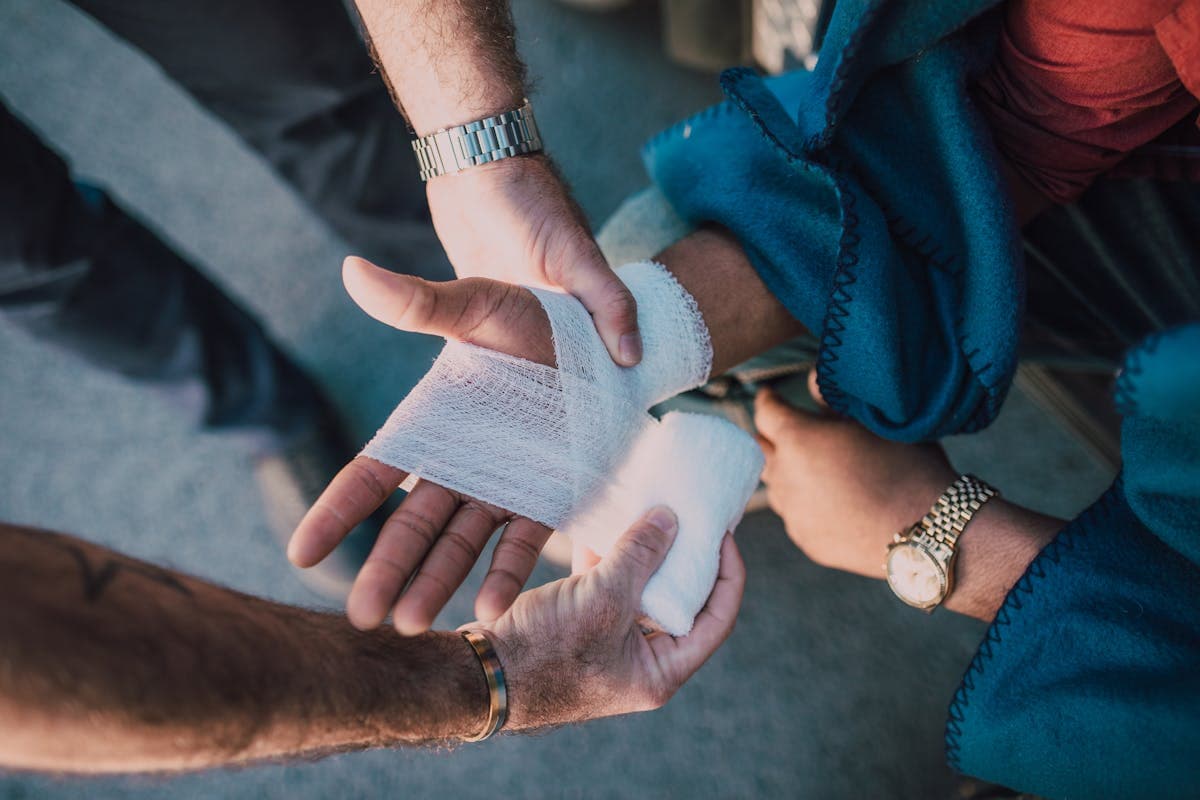
How to Properly Dress a Wound: Antiseptics, Plasters and Dressings
Picture this scenario: you are chopping vegetables for dinner, the knife slips and suddenly you have a sizeable cut on your finger. Your first instinct? Probably to run to the first aid kit for hydrogen peroxide or rubbing alcohol - because "that is how it has always been done". You pour it on the wound, hiss with pain, look at the foam and think: "There, now it is definitely disinfected."
Except this approach is now seriously outdated. Knowledge about wound healing has come a long way over the past decades, and some of the things we did "forever" are no longer recommended today. Hydrogen peroxide and rubbing alcohol can do more harm than good.
The good news is that properly dressing an ordinary household wound really is not difficult. All it takes is a few steps and the right products, which should be waiting in every first aid kit. Today we will calmly and concretely explain how to dress a wound, what to disinfect it with, which dressing to choose and - very importantly - when not to improvise on your own but to see a doctor.
What happens inside a wound and why the way you dress it matters
A wound is a break in the continuity of the skin. The skin is our natural protective barrier - when it is damaged, microorganisms from the environment (as well as from our hands and objects) have an open path into the body. That is why the two goals of dressing a wound are always the same: to remove contaminants and microorganisms, and to create conditions in which the skin can regenerate efficiently.
Healing proceeds in several overlapping phases: first the body stops the bleeding and triggers inflammation (cleaning up the wound), then new tissue forms, and finally the wound closes and the scar gradually matures. Your job with an ordinary cut is simple: do not interfere with this process and protect the wound from infection and drying out.
Step 1: Stop the bleeding
Before you disinfect anything, get the bleeding under control. For typical cuts it is enough to use:
- Pressure - apply a clean gauze pad or a piece of clean cloth and press the wound firmly but calmly for a few minutes.
- Elevation - if possible, raise the injured part of the body above heart level (e.g. lift your hand up). This slows the inflow of blood.
- Patience - do not peek under the gauze every few seconds. Constant checking tears the clot that is forming and prolongs the bleeding.
Minor cuts usually stop bleeding after a few minutes of pressure. If blood keeps flowing intensely, spurts strongly or cannot be stopped after several minutes - that is a signal that medical help is needed. We will come back to this further on.
Step 2: Clean the wound - this is more important than you think
Disinfection alone will not work well if sand, specks of soil, fragments of asphalt or scraps of clothing remain in the wound. Mechanically cleaning the wound is the absolute foundation.
What to rinse the wound with
- Clean, lukewarm tap water - under household conditions it is fully sufficient for rinsing a fresh wound. Simply hold the cut under a gentle stream.
- Physiological saline (0.9% NaCl) - gentle on tissues, excellent for washing wounds, especially the more sensitive ones. Small ampoules are a handy item for the first aid kit.
Rinse the wound calmly until you have removed visible contaminants. If foreign objects are embedded deep in the wound (a splinter reaching deep, a piece of glass, gravel pushed under the skin) and do not come out with gentle rinsing - do not pull them out by force. Leave that to a specialist.
Before touching the wound, wash your hands thoroughly with soap and water and, if you have them, put on disposable gloves. This is a simple step that is easy to forget but that genuinely reduces the risk of infection.
Step 3: Disinfect the wound with a modern antiseptic
After cleaning comes the time for disinfection, that is, reducing the number of microorganisms in the wound. And here comes the most important change compared to what was done in the past.
Why an antiseptic
An antiseptic is a preparation that limits the multiplication and number of microorganisms on the skin and in the wound. Modern over-the-counter antiseptics are designed to act on microorganisms while being as gentle as possible on healing tissue.
Proven substances for wounds
- Octenidine - a popular, broad-spectrum antiseptic used to disinfect skin and wounds. Usually well tolerated, it does not sting as strongly as alcohol-based preparations. It comes as solutions for washing and as a spray for application.
- Povidone-iodine - an iodine antiseptic with a broad spectrum of action, used to disinfect skin and wounds. It has a characteristic brown colour. It is not suitable for everyone (among others, caution is required with thyroid disease, in pregnancy and in small children) - if in doubt, ask a pharmacist.
- Other antiseptic preparations - in pharmacies you will also find products based on, among others, polyhexanide, often combined with moisturising substances, intended for cleaning and caring for wounds.
Apply the antiseptic to the cleaned wound according to the package leaflet - most often by spraying or by placing a soaked gauze pad. Give it a moment to work before you apply the dressing.
Why hydrogen peroxide and rubbing alcohol are no longer recommended in a wound
This is probably the most important section of this article. Hydrogen peroxide and rubbing alcohol, as well as other alcohol-based preparations, were the household standard for years - but for a fresh, open wound they are not recommended today.
- They irritate and damage healthy tissue - alongside microorganisms, they also "attack" the cells that are meant to rebuild the wound. This can slow healing.
- Hydrogen peroxide acts briefly and superficially - the dramatic foaming is not a measure of effectiveness. Mechanically flushing out contaminants with water or saline does the job better.
- Rubbing alcohol on a wound can be very painful - especially in children, and pain heals nothing.
This does not mean these products are useless - salicylic alcohol is sometimes used to disinfect the skin around a wound or intact skin. The point is not to pour them directly inside a fresh wound. For the wound itself, choose a modern antiseptic intended for wounds.
Step 4: Choose the dressing - a plaster or something more
A dressing protects the wound from dirt and microorganisms, absorbs exudate and keeps it in conditions that favour healing. The choice depends on the type and size of the cut.
How much does your basket cost?
See how much your basket costs across pharmacies — free, no registration
Compare pricesWhen an ordinary plaster is enough
A plaster with a wound pad is a good solution for:
- minor cuts and small, shallow abrasions,
- wounds that do not bleed heavily and have even edges,
- spots exposed to dirt and friction (fingers, hands).
Various options are available: waterproof plasters, breathable ones, ones for sensitive skin, as well as ones for tricky spots such as heels or finger creases. Change the plaster when it gets dirty, wet or comes off.
When a dressing (gauze, compress) is needed
Sterile gauze or a ready-made compress with a fixing plaster works well when:
- the wound is larger than a standard plaster,
- the cut is oozing and needs a more absorbent material,
- the abrasion covers a large area of skin (e.g. an extensive abrasion of the knee or elbow).
The gauze is placed on the wound and fixed with a plaster or bandage. Important: the dressing must not press so firmly that it cuts off circulation - the fingers below the dressing should not turn blue or go numb.
Specialist dressings - hydrocolloid and others
Hydrocolloid dressings are also available over the counter in pharmacies. These are flexible plasters that, in contact with wound exudate, create a gelling environment that retains moisture. They are used, among other things, for abrasions and blisters (for example, from new shoes). Such a dressing is usually left on longer and changed less often - always according to the instructions on the packaging.
The myth of "let the wound dry out and form a scab"
Many of us grew up believing that a wound is best "aired out" so that a hard scab forms. The contemporary approach to healing is different: a wound that heals in a moderately moist environment (under a dressing that retains moisture) often heals more efficiently, and the risk of a visible scar tends to be smaller.
A thick, hard scab is not a goal in itself - it can even hinder the rebuilding of the skin underneath and tempt you to pick at it. That is why, instead of "drying" the wound in the air, it is more sensible to protect it with an appropriate dressing.
This of course does not mean the wound should be wet or that the dressing may be left on for weeks. It is about balance: clean, reasonably moist, regularly checked. If the dressing soaks through, is dirty or wet - change it.
Types of wounds - a short guide
Abrasions (superficial wounds)
These occur when the skin has been "scraped off" against a rough surface (a fall on asphalt, scraping against a wall). They are often stinging and dirty but shallow. The key is thorough rinsing out of contaminants, disinfection and protection with a dressing that guards against further friction.
Cuts (incised wounds)
These are wounds with relatively even edges, inflicted by a sharp object (knife, glass, sheet of paper). You can dress minor cuts at home. Deep, heavily bleeding incised wounds, as well as those whose edges gape apart and "refuse" to come together, require assessment by a doctor - sometimes they need to be closed.
Lacerations and puncture wounds
Lacerations have irregular, ragged edges (catching on a sharp object, some falls). Puncture wounds are narrow but can reach deep (a nail, a piece of wire). Both categories are difficult to assess properly at home - infection occurs in them more easily. With lacerations and deep puncture wounds, it is worth consulting a doctor.
When you absolutely must see a doctor
Some wounds are not suitable for self-treatment. Contact a doctor or go for medical help (and in serious situations call the emergency number) if:
- The wound is deep - subcutaneous tissue, fat or muscle is visible; the edges gape widely apart.
- The bleeding is heavy - blood spurts strongly or cannot be stopped with pressure.
- The wound is a laceration, extensive or heavily contaminated - and cannot be cleaned well.
- It is a puncture wound - especially one inflicted by a dirty, rusty object.
- A bite has occurred - by an animal or a human; bite wounds carry a high risk of infection and require assessment by a specialist.
- A foreign object is lodged in the wound - one that cannot be removed by gentle rinsing.
- The wound is on the face or in another place where a good cosmetic result matters to you.
- Signs of infection appear - increasing pain, redness spreading around the wound, swelling, warmth, purulent discharge, fever.
- You have a chronic condition that affects healing - e.g. diabetes, immune disorders, circulation problems.
Tetanus - do not underestimate vaccinations
Tetanus is a dangerous disease caused by bacteria present, among other places, in soil, dust and animal faeces. Infection can occur through a contaminated wound - especially a puncture or laceration wound. Protection is not provided by disinfecting the wound but by an up-to-date vaccination.
If you sustain a deeper, dirty, puncture or laceration wound and do not know when you were last vaccinated against tetanus - contact a doctor so they can assess whether a booster dose is needed. This is one of those situations where it really is worth erring on the side of caution.
What is worth having in your first aid kit for wounds
A well-stocked first aid kit lets you calmly dress a typical household cut without a frantic search. It is worth having in it:
- A modern wound antiseptic - e.g. a preparation with octenidine or povidone-iodine.
- Physiological saline in ampoules - for washing wounds and eyes.
- Sterile compresses and gauze - in several sizes.
- Plasters with a wound pad - various sizes, including waterproof ones and ones for sensitive skin.
- Hydrocolloid dressings - useful for abrasions and blisters.
- Fixing plaster and bandage - for securing the dressing.
- Disposable gloves - for dressing wounds.
- Scissors and tweezers - for cutting dressings and removing superficial splinters.
Every now and then it is worth going through the first aid kit and checking expiry dates - an expired antiseptic or dried-out plasters will not do their job when needed.
Frequently asked questions
Can I use hydrogen peroxide to disinfect a wound?
For the inside of a fresh, open wound this is not recommended today - hydrogen peroxide can irritate and damage healing tissue, and it acts briefly and superficially. It is better to rinse the wound with water or saline and disinfect it with a modern antiseptic intended for wounds. Hydrogen peroxide can, however, be helpful on an occasional basis with slight oozing or for the skin around the wound, but that is a different use.
Is it better to leave the wound uncovered or to cover it?
Usually it is better to protect it. A dressing guards against dirt and microorganisms and helps maintain conditions that favour healing. The old belief that a wound should "dry out in the air" does not match contemporary knowledge about healing.
How often should you change the dressing?
Change an ordinary plaster and gauze when they get dirty, wet, come off or soak through. Specialist dressings, e.g. hydrocolloid ones, are often changed less frequently - here, always follow the information on the packaging. At every change, inspect the wound for signs of infection.
How can you tell that a wound is becoming infected?
Worrying signs are increasing (rather than easing) pain, redness spreading around the wound, swelling, warmth in the area, purulent discharge and fever. If you notice them, contact a doctor.
What is the best way to disinfect cuts in a child?
For children, gentle, non-stinging antiseptics intended for wounds work well - which is why alcohol-based preparations and hydrogen peroxide are not a good choice for the wound itself. Some antiseptics have age restrictions, so before buying it is worth asking a pharmacist to help choose a product suitable for the child's age.
Summary - what is worth remembering?
✅ First stop the bleeding - with pressure for a few minutes, with the limb raised if needed.
✅ Clean the wound thoroughly - rinse it with clean water or saline and remove visible contaminants.
✅ Disinfect the wound with a modern antiseptic - preparations with octenidine or povidone-iodine work well.
✅ Do not pour hydrogen peroxide or rubbing alcohol into the wound - they irritate tissue and can slow healing.
✅ Match the dressing to the wound - a plaster covers a minor cut, a larger one requires gauze, and for abrasions and blisters hydrocolloid dressings are helpful.
✅ A moderately moist environment favours healing - the myth about "drying the wound in the air" is outdated.
✅ Deep, lacerated, heavily bleeding, puncture and bite wounds - see a doctor - likewise when signs of infection appear.
✅ Remember tetanus - with a dirty, deep wound and an uncertain vaccination status, consult a doctor.
Disclaimer
This information is educational in nature and does not replace a medical consultation. It concerns the handling of minor, household wounds. In the case of deep, extensive, heavily bleeding, lacerated or puncture wounds, bite wounds, wounds with a foreign object or with signs of infection - contact a doctor. If you are not sure about your tetanus vaccination, also consult a specialist. In life-threatening situations, call the emergency number. Before using an antiseptic, read the package leaflet and, if in doubt, ask a pharmacist.
And remember: a well-dressed wound is not a matter of luck but of a few simple, conscious steps - and a well-stocked first aid kit. An antiseptic, compresses, plasters and hydrocolloid dressings are worth having at home before you need them. And since you top up your first aid kit from time to time anyway, do it wisely: at CheaperForDrug you add all the products to the basket at once, and the comparison tool checks how much you will pay for such a complete set across various online pharmacies. The savings come precisely from comparing the whole basket, not a single plaster.
Take care of your first aid kit in advance - and dress wounds calmly, in the modern way and without panic.