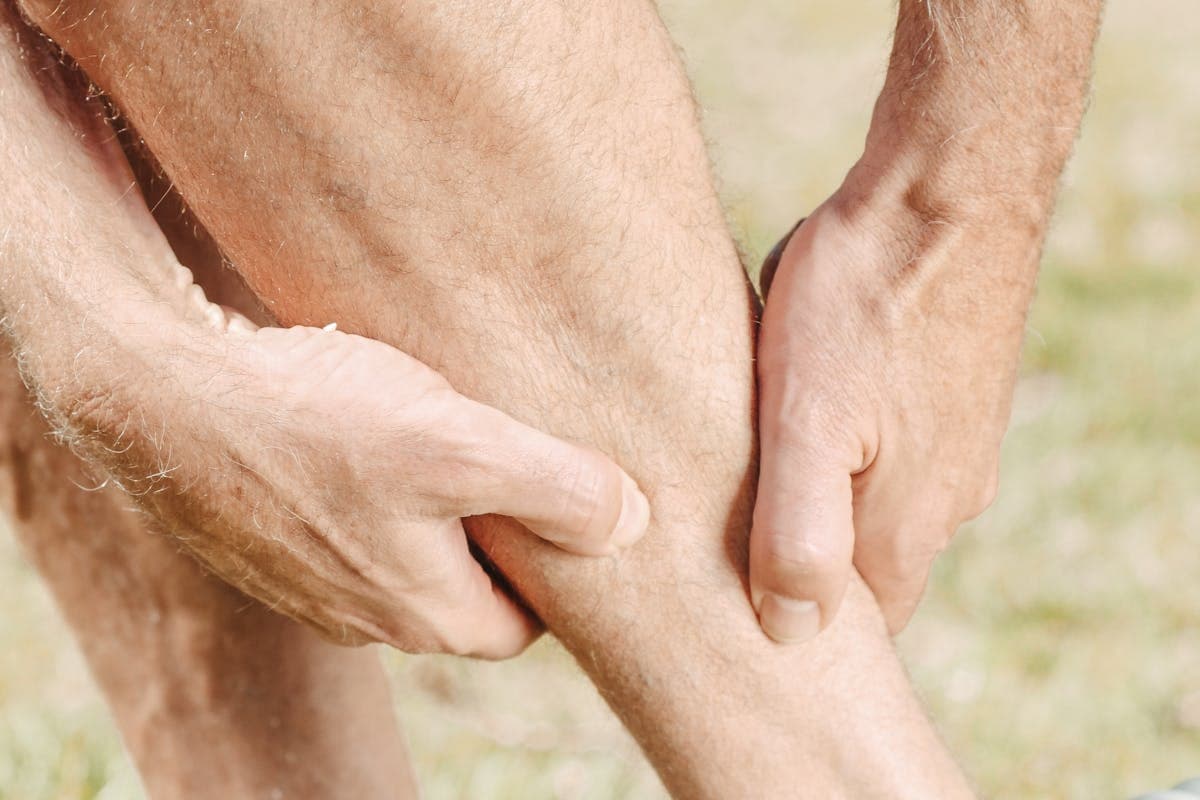
Muscle Cramps in the Heat: Magnesium, Potassium and Hydration
Two in the morning, a July heatwave. You wake up crying out because your calf has seized into a rock-hard knot and your leg has locked straight — you cannot move it. Or picture this: you’re halfway through a morning run, the sun already blazing, and mid-stride your thigh muscle crumples into a searing ball of pain that stops you dead.
Muscle cramps are one of those experiences that can be terrifyingly painful even though, in most cases, they’re completely harmless. In summer we report them far more often — and that’s no accident. Heat, sweat and exertion create the perfect conditions for a muscle to “go rogue.”
Myths have grown up around cramps, and the number one offender is: “take magnesium and it’ll go away.” Sometimes that’s genuinely true. Sometimes it’s money down the drain. In this article we’ll go through it concretely: why heat and exercise cause cramps, when magnesium makes sense (and in which form), the role of potassium, sodium and hydration, and — most importantly — when a cramp is a signal to see a doctor.
What a muscle cramp actually is
A muscle cramp is a sudden, involuntary and usually very painful contraction of a muscle or part of one. The muscle tightens on its own and briefly refuses to relax — you can feel the hard, bulging lump under the skin. Calves, feet and thighs are the most common sites, but cramps can appear almost anywhere.
A single, occasional cramp is generally nothing to worry about. The problem starts when cramps are frequent, very severe, slow to pass or accompanied by other symptoms — we’ll return to those warning signs later.
Why heat and exercise trigger cramps
Exercise-in-heat cramps usually have several overlapping causes. It is rarely one specific “deficiency” — it’s more a cluster of factors that together knock the muscle off balance.
Dehydration
When it’s hot and you’re moving, you sweat heavily and lose water. A drop in hydration changes the environment in which your muscles and nerves operate. A dehydrated body is more prone to cramps, especially when exercise is added to the mix.
Electrolyte loss through sweat
Sweat is not pure water. Along with it you lose electrolytes — above all sodium, and in smaller amounts potassium, magnesium and calcium. These minerals are responsible for correct nerve-impulse conduction and for the muscle contracting and relaxing when it should. When their balance shifts, a muscle can more easily “stick” in a cramp. Sodium is lost in the largest quantities, so during prolonged effort in the heat it is often sodium — not magnesium — that plays the leading role.
Muscle fatigue
Current research suggests that a large share of exercise-related cramps stems not so much from a “mineral deficiency” as from muscle fatigue and overload. A tired muscle has dysregulated nerve mechanisms that normally prevent excessive shortening. That is why cramps so readily strike towards the end of a long effort, during an unfamiliar activity, or when you push intensity too far.
All these factors at once
In summer these elements layer perfectly: it’s hot, you’re sweating heavily, drinking too little, losing electrolytes and loading your muscles with exercise. That’s why “holiday cramps” are so common. The good news is that you have real influence over most of these factors.
Magnesium for cramps: when it helps and when it’s a myth
Magnesium is probably the most frequently recommended “remedy for cramps” — by friends, adverts and the internet. The truth is more nuanced.
Magnesium genuinely plays a role in muscle and nerve function, and a clear deficiency can predispose you to cramps. If you actually have too little magnesium — through a poor diet, certain medications, heavy sweating or absorption problems — topping it up makes sense and can help.
The problem is that in people without a deficiency, magnesium often does not work on cramps the way advertising claims. For ordinary nocturnal calf cramps in adults in particular, the evidence for magnesium’s effectiveness is weak. Many people take it for months “just in case” without any real benefit, while the actual cause lies elsewhere: fatigue, dehydration, or low sodium.
The conclusion is simple: magnesium is not a magic tablet for every cramp. It helps primarily where there is a genuine deficiency. If you eat a varied diet and your cramps strike mainly after heavy exercise in the heat, magnesium alone may not be enough — hydration, sodium and muscle rest will likely matter more.
Magnesium form and absorption
If you do decide to take magnesium, the form matters for how much is actually absorbed and how well it is tolerated:
- Organic forms — such as citrate, lactate, malate or chelate (bisglycinate) — are generally better absorbed and gentler on the stomach and gut.
- Magnesium oxide — popular and cheap because it contains a lot of magnesium “on paper,” but absorbs poorly and at higher doses more often acts as a laxative. Some of the “magnesium” you take may simply pass through your intestines and leave.
So look not just at the large milligram number on the pack, but at the form and at how your body responds. If you want to dig deeper into magnesium forms, we break down the differences between citrate, taurate and oxide in a separate article — here we focus on cramps in the heat.
Potassium and sodium: the underrated heroes
In all the noise about magnesium it is easy to forget two minerals that are often more important when cramps stem from heat.
Sodium — what you lose most
Sodium is the electrolyte we lose in the greatest quantity through sweat. During long, intense effort in the heat — when you’re drenched and pouring sweat — it is the loss of sodium (and water) that is often the primary driver of cramps. That is why, for people who sweat very heavily, water alone sometimes is not enough; replenishing sodium is what actually helps.
How much does your basket cost?
See how much your basket costs across pharmacies — free, no registration
Compare pricesPotassium — for steady muscle rhythm
Potassium, alongside sodium, controls impulse conduction and muscle function. Good dietary sources include bananas, tomatoes, potatoes, leafy vegetables, dried fruit and legumes. With a varied diet you rarely run critically low, but combined with heavy sweat losses it is worth keeping an eye on.
An important warning: do not self-supplement potassium in high doses. Excess potassium can be just as dangerous as a deficiency and puts strain on the heart, especially in people with kidney disease or on certain blood-pressure medications. Potassium is safest replenished through food; supplementation should be discussed with a doctor.
Hydration: water or an electrolyte drink?
With heat-related cramps, hydration is the foundation — but it is not always just about water.
For most people, on a typical hot day, water is entirely sufficient. If you spend the day mostly in the shade, go for a shorter walk or a light workout, drinking water regularly in small amounts usually does the job. You do not need to reach for sports drinks simply because it is hot.
Electrolyte drinks start to make sense when exercise is long and intense and you are sweating heavily — think activity lasting well over an hour, especially in high temperatures, when you are genuinely losing a lot of sodium through sweat. Then a drink containing sodium (and other electrolytes) helps maintain balance better than plain water.
Good to know: electrolytes without water will not hydrate you, and large volumes of plain water during extreme sweating can dilute sodium. It’s about sensible balance — drink regularly and add electrolytes during long exertion, rather than choosing one or the other. If you want to understand more deeply when electrolytes are truly necessary and how to read their labels, we have a separate guide on that.
Mineral-rich water — a simple summer trick
In summer it is worth reaching for high-mineral water — it contains more minerals (including magnesium and calcium) than ordinary spring water. It is a convenient way to add a little extra electrolytes while hydrating, without buying additional supplements. Check the label and choose waters with a higher total mineral content.
Nocturnal leg cramps
A separate and very common problem is nocturnal leg cramps — painful, sleep-disrupting contractions not directly linked to exercise. In summer they can be more frequent because daytime dehydration in the heat compounds the problem.
What actually helps in the moment and as prevention:
- During the cramp — gently stretch the muscle. For a calf cramp, pull your toes towards you (flex your foot) and hold until the muscle releases. Massaging the calf and standing on a cool floor also help.
- Evening calf stretches — a few minutes of gentle stretching before bed can reduce the frequency of nocturnal cramps.
- Staying hydrated through the day — especially in hot weather, so you do not go to bed dehydrated.
- Comfortable sleeping position — a tightly tucked duvet pressing down on your feet can encourage cramps; give your feet room to move.
If nocturnal cramps are very frequent, very painful or worsen despite hydration and stretching, that is a signal to speak to a doctor — particularly for older adults and anyone on regular medications.
Cramps in athletes, older adults and during pregnancy
Cramps do not mean the same thing for everyone. Here are three groups in whom they are especially common.
Athletes and active people
For people training in the heat, muscle fatigue, dehydration and sodium loss are the primary issues. The biggest differences come from: sensible load management, good hydration, electrolyte replenishment during long sessions, and warm-up and cool-down routines. Taking magnesium without addressing hydration and muscle recovery usually does not fix the problem.
Older adults
Cramps, especially nocturnal ones, are very common in older people. Several factors contribute: a reduced sense of thirst (making dehydration easier), medications taken regularly (including diuretics), and age-related changes in muscle. Older adults should pay particular attention to staying hydrated in hot weather and should not start “anti-cramp” supplementation without medical advice — because the cause is often the medications themselves or an underlying condition.
Cramps during pregnancy
Leg cramps, especially at night and in the second half of pregnancy, are a frequent complaint. Hydration, gentle calf stretching and staying mobile all help. During pregnancy, discuss any supplementation — including magnesium — with your doctor; they will determine what is appropriate and at what dose. Do not self-select supplements by guesswork.
Diet or supplements — which to choose?
Since we lose electrolytes through sweat, the natural question is: eat more “the right” foods, or take tablets?
The principle that works for most people: food and hydration first; supplements only when genuinely needed.
Good dietary sources of key minerals:
- Magnesium — nuts and seeds (pumpkin, sunflower), whole grains, buckwheat, legumes, leafy greens, dark chocolate.
- Potassium — bananas, tomatoes and tomato paste, potatoes, leafy vegetables, dried fruit, beans and lentils.
- Calcium — dairy, calcium-fortified plant milks, leafy greens, sesame seeds.
- Water and minerals together — high-mineral water as a simple summer addition.
Supplements are worth considering when: your diet is one-sided, you sweat heavily and often, you take medications that increase electrolyte loss, or a doctor has confirmed a deficiency. A dietary supplement does not replace a varied diet — it is meant to fill genuine gaps. If you are unsure of the difference between a supplement and a medicine, or how to read labels, we explain that in a separate article.
Magnesium and medications — what to keep in mind
Mineral supplements are not neutral when it comes to how some medications work, so a few things are worth bearing in mind.
- Diuretics (water tablets) — they increase the excretion of water and electrolytes, and can themselves promote cramps while altering magnesium and potassium levels. If you take them, discuss supplementation and hydration with your doctor.
- Absorption of other medications — magnesium (and calcium) can reduce the absorption of certain drugs, such as some antibiotics or iron preparations. A time gap between doses is often recommended — ask your pharmacist how to space them.
- Kidney disease and heart/blood-pressure medications — with these conditions, self-supplementing magnesium or potassium can be genuinely dangerous. The decision always rests with a doctor.
If you take regular medications, the simplest thing is to ask a pharmacist before buying a supplement — it is a free consultation that can save you from an unpleasant interaction. You can read more about how medications and supplements affect each other in our guide on interactions.
When a cramp is a signal to see a doctor
The vast majority of cramps are harmless. But there are situations in which a cramp or “leg pain” can be a symptom of something serious — and these signals must not be ignored.
Seek prompt medical attention if:
- The pain is in one leg and is accompanied by swelling, redness, warmth or tenderness in the calf — this may be a sign of deep vein thrombosis, a condition requiring urgent medical assessment, not a simple cramp.
- Cramps are accompanied by muscle weakness, numbness, tingling or other neurological symptoms.
- Cramps are very frequent, very severe, slow to pass, or significantly disrupt daily life and sleep.
- Signs of dehydration or heat illness appear — severe weakness, dizziness, nausea, confusion or collapse in the heat. This can be a heat-related emergency; call emergency services (112 or the equivalent in your country) if someone collapses or cannot be roused.
- You have chronic conditions (kidney, liver or thyroid disease, diabetes) or take regular medications, and cramps have suddenly worsened.
- A cramp followed an injury, or the muscle remains hard, swollen and painful after releasing.
In short: a single calf cramp after a workout in the heat that eases with stretching is normal. A one-sided, worsening leg pain with swelling, or cramps with neurological symptoms, are signals to act — do not “wait it out” with magnesium.
Frequently asked questions
Will magnesium definitely help my cramps?
Not necessarily. Magnesium helps primarily when there is a genuine deficiency. For ordinary cramps caused by fatigue or dehydration, hydration, sodium and muscle rest often matter more. If you eat a varied diet, magnesium alone may not solve the problem.
Which form of magnesium absorbs best?
Organic forms such as citrate, lactate, malate and chelate (bisglycinate) are generally better absorbed and gentler on the stomach. Magnesium oxide contains a lot of magnesium by weight but absorbs poorly and at higher doses more often causes loose stools. Look at the form, not just the milligram number.
Water or a sports drink on a hot day?
For most people doing moderate activity, water is perfectly sufficient. Electrolyte drinks make sense during long, intense exertion with heavy sweating (roughly over an hour in the heat), when you are genuinely losing a lot of sodium through sweat.
Can I supplement potassium to prevent cramps?
Potassium is safest replenished through diet (bananas, tomatoes, potatoes, vegetables, legumes). Do not self-supplement potassium in significant doses — excess potassium can be dangerous to the heart, especially with kidney disease or certain medications. This is a topic to discuss with a doctor.
What should I do during a painful calf cramp?
Gently stretch the muscle — pull your toes towards you and hold until the cramp eases. Massaging the calf, standing on a cool floor and slowly straightening the leg also help. Once the cramp passes, make sure to rehydrate.
Cramps during pregnancy — should I take magnesium?
Leg cramps in pregnancy are common. Hydration, stretching and gentle movement help, but discuss any supplementation — including magnesium — with your doctor or midwife; they will choose the right product and dose. Do not select supplements on your own.
Summary
✅ Heat cramps usually have several causes at once — dehydration, electrolyte loss through sweat and muscle fatigue.
✅ Magnesium is not a magic tablet — it helps mainly where there is a deficiency; in well-nourished people it often does not deliver what the advertising promises.
✅ The form of magnesium matters — citrate, lactate or chelate typically absorb better than cheap oxide.
✅ Sodium and potassium are often more important than magnesium — sodium is what you lose most in sweat; replenish potassium mainly through food.
✅ Water usually suffices — add electrolytes during long, intense exercise in the heat; high-mineral water is an easy summer addition.
✅ Food and hydration first, supplements only when genuinely needed — and if you take regular medications, ask a pharmacist about interactions.
✅ One-sided leg pain with swelling, neurological symptoms or signs of heat illness mean see a doctor — do not wait those out with magnesium.
Disclaimer
This article is educational in nature and does not replace consultation with a doctor or pharmacist. It does not constitute diagnostic advice or a recommendation of any specific treatment or dosage. If your cramps are frequent, very severe, one-sided, accompanied by leg swelling, neurological symptoms or signs of heat illness, or if you have chronic conditions and take regular medications — speak to a doctor. Supplementation of magnesium, potassium and other minerals, especially during pregnancy, in older adults, and in people with kidney or heart conditions, should be agreed with a doctor or pharmacist.
A summer “cramp and hydration kit” is rarely just one product — it’s usually a combination: a well-chosen magnesium supplement, electrolyte sachets for longer outings, high-mineral water and perhaps a cooling gel or balm for tired muscles. Instead of buying these piece by piece and overpaying, add the whole basket to CheaperForDrug and compare the total cost across various online pharmacies at once. Real savings come from comparing the full basket, not a single pack — and you can be confident you’re paying the least for everything that genuinely helps.