A Senior’s Home Medicine Cabinet: What It Should Contain
The average older adult takes several prescription medicines simultaneously — for high blood pressure, diabetes, joint pain, or heart conditions. In that context, a home medicine cabinet is far more than a drawer full of plasters and pain relievers. It’s a carefully considered set of products that provides rapid help in emergencies while reducing the risk of dangerous interactions and dosing mix-ups.
A well-assembled senior medicine cabinet should address the specific needs of an older person: chronic conditions, safe over-the-counter options, and the diagnostic equipment needed for day-to-day health monitoring. This article walks you through every element, step by step.
Keep in mind that an older body metabolises medicines differently from a younger adult’s — the liver and kidneys work more slowly, and active substances remain in the bloodstream longer. That’s why choosing medicines and supplements for seniors requires extra care.
A Supply of Medicines for Chronic Conditions
The foundation of any senior medicine cabinet is the medicines prescribed by a doctor. Managing and replenishing them requires consistency — abruptly stopping treatment for high blood pressure or anticoagulation, for example, can be life-threatening.
How to manage prescription medicines at home
- Keep an up-to-date medicines list — write down the name, dose, frequency, and indication (e.g. “for blood pressure”). This list should always be accessible to emergency responders and family members.
- Maintain at least a 2–4 week supply — don’t wait until the last tablet before collecting a repeat prescription; a sudden illness can make leaving home impossible.
- Use a weekly pill organiser — a pill box with compartments for each day of the week significantly reduces the risk of missed or double doses.
- Check expiry dates at least every 6 months — expired medicines may lose effectiveness or produce toxic breakdown products.
The risk of polypharmacy — when “more” means “worse”
Polypharmacy — the simultaneous use of five or more medicines — affects a large proportion of people over 65. The problem grows when over-the-counter (OTC) products are added to existing prescription regimens without consulting a pharmacist or doctor. The most common risky combinations include:
- NSAIDs (e.g. ibuprofen) + anticoagulants — increased risk of gastrointestinal bleeding.
- Calcium or magnesium supplements + osteoporosis or thyroid medicines — minerals can impair absorption of prescription drugs; allow at least 2–4 hours between them.
- over-the-counter sleep aids (diphenhydramine) + blood pressure medicines or antidepressants — enhanced sedation, increased risk of falls and dizziness.
- St John’s Wort preparations + many prescription medicines — St John’s Wort induces CYP3A4 liver enzymes, lowering the blood levels of numerous medicines including anticoagulants and immunosuppressants.
Consult a pharmacist before adding any new over-the-counter product. Many pharmacies offer free medicines reviews for older adults — it’s a service well worth using.
Safe Over-the-Counter Pain Relievers and Fever Reducers
Pain and fever can come on suddenly, so the medicine cabinet must always have something to hand. But choosing the right product for a senior is not straightforward.
Paracetamol — the first choice for seniors
Paracetamol (500 mg or 750 mg tablets) is the preferred medicine for mild to moderate pain and fever in older adults. It is easier on the stomach than NSAIDs, does not affect platelet aggregation, and does not interact with most cardiac medicines. The usual adult dose is 500–1000 mg every 4–6 hours, up to a maximum of 3 g per day (lower in people with liver disease — seek guidance). Important: paracetamol is hidden in many combination cold remedies, so take care not to exceed the total daily dose.
Ibuprofen — use with great caution
Ibuprofen (200–400 mg) provides effective anti-inflammatory relief, but carries significant risks in older adults: gastric mucosal damage, sodium and water retention (harmful in high blood pressure and heart failure), and worsening kidney function. Unless a doctor has advised otherwise, ibuprofen in adults over 65 should be used sparingly, at the lowest effective dose, for the shortest possible time, and always with food or a gastroprotective agent.
What to avoid
- Aspirin at full analgesic doses — do not confuse this with low-dose aspirin (75–150 mg) prescribed for cardiovascular reasons. High-dose aspirin in seniors increases the risk of bleeding and kidney damage.
- Metamizole (dipyrone) without medical guidance — can occasionally cause agranulocytosis; older adults are more susceptible. Check local availability and prescription rules, as this medicine is restricted in some countries.
Monitoring Devices — Essential Equipment for Seniors
Regular monitoring of key health parameters helps detect worrying changes early and reduces the number of unplanned doctor visits.
Upper-arm blood pressure monitor
This is an absolute priority. An automatic upper-arm blood pressure monitor is easier to use and more accurate than a wrist device (particularly for people with peripheral circulation problems). Measurements should be taken at rest after 5 minutes of quiet sitting, morning and evening at the same times. Keeping a blood pressure diary is a valuable diagnostic tool for your doctor.
Blood glucose meter
Essential for seniors with diabetes or prediabetes. When buying, look for a large, easy-to-read display and simple operation. Remember to calibrate regularly and check the expiry dates of test strips.
Thermometer
An electronic thermometer (axillary, forehead, or ear) is safer than a glass mercury thermometer. A senior’s baseline temperature can be slightly below 36.6°C (97.9°F), so any reading above 37.5°C (99.5°F) should be treated as a warning signal — especially alongside other health conditions.
Pulse oximeter
Particularly useful for seniors with lung or heart disease. It measures blood oxygen saturation (SpO2) — a reading below 94% at rest should prompt contact with a doctor.
How much does your basket cost?
See how much your basket costs across pharmacies — free, no registration
Compare pricesSupportive Medicines and Supplements — What’s Worth Having
Electrolytes and hydration
Seniors are especially vulnerable to dehydration — the sense of thirst diminishes with age, and many medicines (diuretics, laxatives) deplete electrolytes further. Oral rehydration salts (ORS) in sachets (containing sodium, potassium, and glucose) are an essential part of the cabinet — particularly during episodes of diarrhoea, vomiting, or hot weather. Available without a prescription; follow the instructions on the packet.
Constipation remedies
Constipation is one of the most common problems in older adults, particularly those taking opioids, antidepressants, or blood pressure medicines. Useful options include:
- Lactulose (syrup or powder) — an osmotic laxative, safe for long-term use, gentle in action.
- Macrogols (PEG) in sachets — effective and well tolerated, not absorbed from the gut.
- Glycerol suppositories — fast local action, useful for occasional constipation.
- Bisacodyl (tablets or suppositories) — stronger effect, but not recommended for regular use without medical supervision.
Remedies for digestive complaints
Activated charcoal (for food poisoning), simeticone (bloating), antacids (e.g. aluminium/magnesium hydroxide) — these can all be helpful. A key caveat: antacids can impair the absorption of other medicines; allow at least 2 hours between taking antacids and other preparations.
Supplements — with your head, not your heart
Supplementation is particularly often justified in seniors for:
- Vitamin D3 (800–2000 IU per day) — deficiency is common, especially in autumn and winter; D3 supports bones, immunity, and muscle function.
- Magnesium (citrate or glycinate form) — for muscle cramps, tremor, and sleep disturbance.
- Vitamin B12 — dietary absorption declines with age; deficiency can produce neurological symptoms (tingling, memory problems).
- Omega-3 fatty acids (EPA/DHA) — support cardiovascular health.
Every supplement a senior takes should be discussed with a doctor or pharmacist — even seemingly harmless products can interact with prescription medicines (for example, omega-3 with warfarin).
Wound Care Supplies and Useful Tools
A senior’s skin is thinner, less elastic, and heals more slowly than younger skin. Even a minor graze or cut can turn into a slow-healing wound if it is not treated quickly and correctly. The quality of wound care materials therefore matters more here — it is not worth cutting corners on plasters or antiseptics.
- Absorbent plasters in various sizes (including larger ones for injuries to the legs and feet) — “sensitive skin” versions are gentler for those with fragile skin or taking corticosteroids
- Sterile gauze and elastic bandage — for dressing wounds after falls or orthopaedic surgery
- Antiseptic solution (e.g. octenidine or chlorhexidine spray) — for disinfecting wounds; ethyl alcohol is effective but can irritate a senior’s dry, sensitive skin; octenidine has broad-spectrum activity and is well tolerated
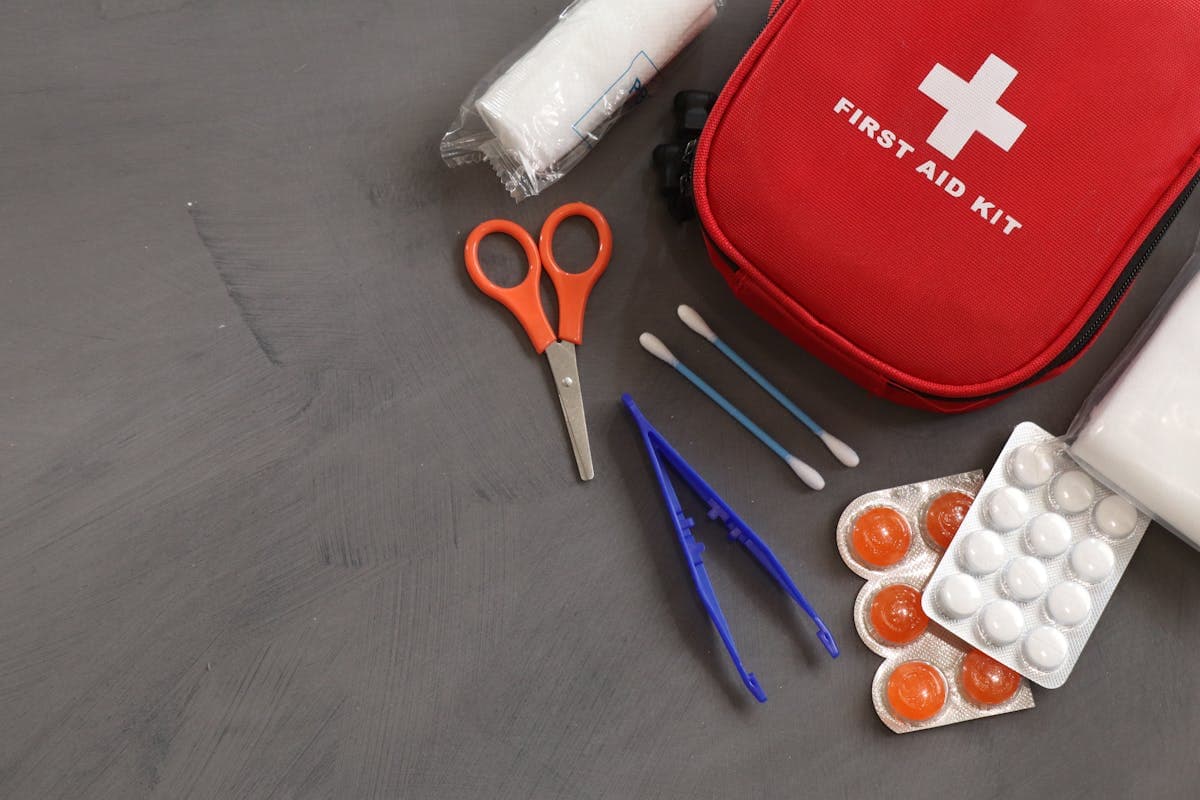
- Scissors and tweezers (sterile, for removing splinters or ticks)
- Disposable gloves — latex or nitrile; always wear them before dressing someone else’s wound
- Emergency foil blanket (thermal blanket) — for hypothermia or sudden deterioration before emergency services arrive; weighs almost nothing and can save a life
- Small torch or head torch — during a power cut or when a close look at a wound is needed
Organising the Cabinet — Practical Tips
The contents of a medicine cabinet are one thing; its organisation determines whether you can actually find the right product within seconds in a stressful moment. A few tried-and-tested principles:
Divide into zones
It is worth physically separating prescription medicines (in a dedicated compartment or container labelled with the senior’s name) from over-the-counter products and wound care supplies. In a household with several people, each person should have their own clearly labelled container — especially when different household members take medicines with similar names or appearances.
Clear labels in large print
For seniors with weakening eyesight or early-stage dementia, additional large-print stickers (medicine name, dose, time to take) significantly reduce the risk of error. Specialist organisers with graphic symbols instead of text are also available.
A checklist inside the cabinet
A list of all medicines being taken (with doses and indications) attached inside the cabinet door is invaluable when emergency services arrive or in the event of a sudden hospital admission. Paramedics and emergency department doctors always ask about current medication — the list saves time and can prevent dangerous interactions during in-hospital treatment.
Reviewing the Cabinet — When and How?
Even the best-assembled cabinet loses its value if it is not reviewed regularly. A suggested schedule:
- Every 6 months — check expiry dates on all products. Return expired medicines to a pharmacy (do not throw them in the bin or flush them down the toilet).
- Every 12 months — update the medicines list (after every doctor’s visit that changes treatment).
- After every use — replenish used plasters, gauze pads, and tablets.
- Seasonally — in autumn, top up vitamin D3 and cold remedies; in summer, add electrolytes and diarrhoea treatment.
It is also worth making sure that the people closest to the senior know where the cabinet is kept and are familiar with the list of medicines being taken.
Red Flags — When to Call for Help Immediately
A medicine cabinet is no substitute for medical care. Call emergency services (112 or your local emergency number) or go to the emergency department immediately if a senior develops:
- Chest pain, shortness of breath, or blue-tinged lips or fingernails
- Sudden speech or vision problems, or inability to raise both arms (signs of stroke — remember the FAST test)
- Blood pressure above 180/110 mmHg with accompanying symptoms
- Fever above 38.5°C (101.3°F) in a person with a chronic condition or taking immunosuppressants
- Loss of consciousness, even briefly
- Severe bleeding that cannot be controlled within 10 minutes
Frequently Asked Questions
Is paracetamol safe for a senior taking medication for liver disease?
Paracetamol is metabolised by the liver, so in people with liver failure or a history of heavy alcohol use the daily dose must be significantly reduced (often to 2 g per day or less). Always consult a doctor or pharmacist about the choice and dosing of pain relievers when liver conditions are involved.
How long can medicines be kept in the cabinet?
Every medicine has an expiry date on its packaging — once that date has passed, the product should be returned to a pharmacy. Also remember that medicines should be stored in a cool, dry, dark place; the humidity of a bathroom and the heat of a kitchen both shorten the shelf life of medicines.
Can a senior buy supplements and Over-the-Counter medicines independently, without consulting anyone?
Technically yes, but given the risk of interactions with prescription medicines, it is always worth consulting a pharmacist before starting any new product. Many pharmacies offer a free medication review service — a great starting point for any senior taking more than three regular medicines.
What is polypharmacy and why is it dangerous for seniors?
Polypharmacy means taking five or more medicines simultaneously. In seniors it is particularly hazardous because the ageing body metabolises active substances more slowly, increasing the risk of medicines accumulating in the blood. The consequences can include falls (from excessive blood pressure lowering or sedation), gastrointestinal bleeding, and even acute kidney failure.
How do I store medicines so they are safe from children but still easy for the senior to reach?
The best solution is a lockable cabinet or box placed at a height that is comfortable for the senior (not on the highest shelf) but out of reach of small children. Key emergency medicines (such as glyceryl trinitrate for someone with coronary artery disease) should always be within easy reach — for example, kept in a fixed, accessible spot by the bedside.
How often should the senior’s medicines list be updated?
The list should be updated after every doctor’s visit that changes the treatment plan — whether a new medicine is added, one is stopped, or a dose is changed. It is worth keeping a copy inside the cabinet, in the senior’s wallet, and on a trusted person’s phone.
Summary
✅ A 2–4 week supply of chronic-condition medicines is the foundation of the cabinet — losing access to essential therapy can be more dangerous than the condition itself.
✅ Paracetamol as the first-line pain reliever is safer for seniors than NSAIDs; use ibuprofen only occasionally and after discussion with a pharmacist or doctor.
✅ A blood pressure monitor, thermometer, and glucose meter are essential diagnostic tools — regular readings help catch worrying changes early.
✅ Electrolytes and constipation remedies address two of the most common problems in older adults and should always be to hand.
✅ A medicines list and an expiry-date check every 6 months is a simple routine that protects both health and money.
✅ Every new supplement or over-the-counter medicine deserves a pharmacist’s input — polypharmacy is a real risk, not just a medical statistic.
✅ High-quality wound care supplies are essential because a senior’s skin heals more slowly — it is worth investing in good plasters and antiseptics.
Disclaimer
This article is for educational purposes only and does not replace advice from a doctor or pharmacist. Doses and recommendations given here are general in nature — the individual choice of medicines and supplements for a senior should always be discussed with a healthcare professional, taking into account current medical conditions and existing therapies.
Assembling a senior medicine cabinet is one thing; managing its costs wisely is another. over-the-counter medicines, vitamin supplements, glucose test strips, and electrolytes can vary in price considerably from one pharmacy to the next. On CheaperForDrug you can compare the price of your whole basket across various online pharmacies at once — because genuine savings come from comparing a full basket of products, not just a single pack.