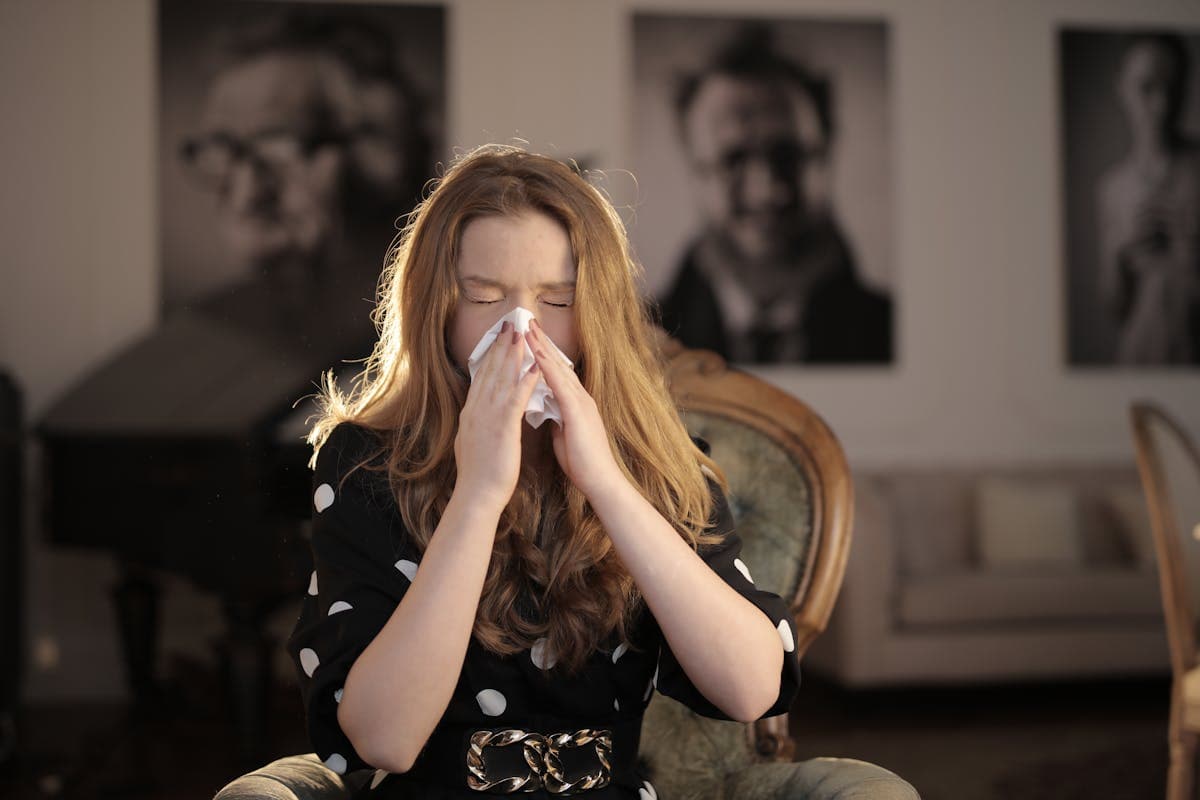
Summer cold: why we get sick in the heat and how to treat it
Mid-July. The thermometer reads 32 degrees. You come back from the beach tanned, warmed through and happy. And the next morning you wake up with a blocked nose, a scratchy throat and that characteristic feeling of being "run-down". Your first thought: "It is summer, there is no way I could have caught a cold."
And yet. A cold does not check the calendar. It is a viral infection, and viruses circulate among us all year round - even when it is sweltering outside. What is more, summer creates entirely its own, specific conditions that make falling ill easier.
If you have ever fallen ill on holiday, you are neither an exception nor unlucky. In this article we will explain why a summer cold really exists, how to tell it apart from a seasonal allergy (because that is a common mix-up) and what to do to get back on your feet faster and enjoy the rest of the summer.
Can you really catch a cold in summer?
The short answer: yes, and not rarely at all. A cold is an illness caused by viruses - most often rhinoviruses, but in summer enteroviruses also play a big part, as they cope exceptionally well during the warm months.
The very term "cold" is misleading. The name itself suggests that the illness comes from "the cold". In reality it is not temperature that infects us, but a virus. Cold (or sudden temperature changes) can only weaken the natural defences of the mucous membranes and make it easier for the virus to attack. And in summer there are surprisingly many such weakening factors.
That is why a summer cold is neither a myth nor an excuse. It is a real, well-documented situation - it is just that its causes differ a little from the winter ones.
Why do we get sick in the heat? The main causes
Summer looks innocent, but it hides several traps for our immune system. Here are the most important of them.
Air conditioning and draughts
This is by far the prime suspect. Air conditioning does not in itself cause an infection, but it creates ideal conditions for one to occur:
- It dries out the air - dry mucous membranes of the nose and throat defend themselves worse against viruses, because they lose their layer of protective mucus.
- A stream of cold air aimed straight at the neck, back or face cools the body locally and lowers local immunity.
- Uncleaned air-conditioning filters can accumulate microorganisms, which then end up in the air you breathe.
Draughts work in a similar way - especially when you are sweaty. An open car window during a motorway drive, or a fan blowing all night on a sleeping person, are classic scenarios that lead to a morning runny nose.
Sudden temperature changes
This is probably the most important summer factor. Picture a typical hot day: 33 degrees on the street, you walk into a shop or office cooled to 21 degrees, then you get into a baking hot car, and after that into a cool shopping centre again.
Within a few hours your body goes through a difference of 10-12 degrees more than ten times over. Each such change is an effort for the thermoregulation and immune systems. The blood vessels of the mucous membranes contract one moment and dilate the next, and membranes weakened in this way become an easy target for viruses.
Cold drinks and ice cream
In the heat we reach for ice-cold drinks and ice cream almost on instinct. They do not cause a cold in themselves, but an ice-cold liquid flowing through the throat cools the membrane locally and briefly lowers its defensive abilities. If an active virus happens to be nearby, you are out of luck.
Summer viruses in circulation
Summer is a time of travel, festivals, concerts, swimming pools and crowded beaches. More contact with people means more opportunities to exchange viruses. The enteroviruses mentioned above spread brilliantly through water and close contact, which is why they circulate especially intensively during the holidays.
How much does your basket cost?
See how much your basket costs across pharmacies — free, no registration
Compare pricesTiredness and lack of sleep
Holidays have their own rules: late evenings, short nights, plenty of impressions, sometimes a change of time zones. Chronic sleep deprivation and exhaustion genuinely weaken the immune system. A body that has not had time to recover succumbs to an infection more easily.
A cold or an allergy? How to tell them apart
This is one of the most common summer mix-ups. A runny nose, sneezing and a blocked nose during the grass pollen season are often mistaken for an infection - and vice versa. And they are treated completely differently, so it is worth learning to distinguish between them.
What points rather to an allergy
- Itching - the eyes, nose, sometimes the palate and ears itch. Itching is a very typical signal of an allergy.
- Bouts of sneezing - series of several, even a dozen sneezes one after another.
- Watery, clear discharge from the nose, which stays that way.
- Red, watering eyes.
- The symptoms recur under the same conditions - in a meadow, after the lawn has been mown, in particular weather - and ease off at home or after rain.
- No fever and no general feeling of being "run-down".
- The symptoms last for weeks, as long as the pollen lingers.
What points rather to a cold
- Pain or a scratchy feeling in the throat - often the first symptom of an infection, rare with an allergy.
- A low-grade or full fever - an allergy does not raise the temperature.
- The nasal discharge changes character - from watery it becomes thick, sometimes yellowish or greenish.
- A feeling of being generally run-down, muscle aches, tiredness.
- The symptoms build up over 1-2 days and then gradually ease off within about a week.
- There is no typical itching of the eyes and nose.
The simplest rule of thumb: it itches and I sneeze in bouts - that is rather an allergy. My throat hurts and I have a low-grade fever - that is rather a cold. If the symptoms are mixed or unclear, or recur every year, it is worth consulting a doctor - an allergy can be confirmed with tests.
How to treat a summer cold?
We have good news: a summer cold is treated exactly the same as a winter one. There is no "summer" variant of the illness requiring special measures. The treatment is symptomatic - we relieve the individual complaints, and the body deals with the virus on its own, usually within 7-10 days.
Rest and hydration - the basics
It sounds trivial, but it is the most important thing. Give yourself the right to slow down, even on holiday. In the heat there is an extra problem: with a fever and sweating, dehydration sets in very easily. Drink more than usual - water, teas, electrolytes. Good hydration also thins the discharge and makes clearing the nose easier.
Over-the-Counter medicines that relieve symptoms
At the pharmacy you will find over-the-counter products for every cold symptom:
- For fever and pain (throat, head, muscles) - paracetamol or ibuprofen. Use them as directed by the leaflet and do not combine several products containing the same substance.
- For a blocked nose - short-term (a few days) decongestant products for the mucous membrane. A very safe option, especially in summer, is seawater spray, which moisturises membranes dried out by air conditioning.
- For a sore throat - lozenges, soothing sprays, gargles.
- For a cough - syrups matched to the type of cough (one product for a dry cough, another for a productive one).
It is worth knowing that ready-made multi-ingredient "cold" products are convenient, but you often overpay for ingredients you do not currently need. If only a sore throat is bothering you, there is no point in buying a set that also tackles a runny nose, fever and cough.
Home methods that support treatment
- Inhalations with saline - they moisturise the airways.
- Gargling the throat with warm salt water.
- Warm drinks with honey and lemon (honey not for children under 1 year of age).
- Sleep in a well-aired but draught-free room.
When a cold catches you on holiday
An illness during a trip is doubly irritating - every day of the holiday is a shame to lose. Yet the losses can be limited. First, do not pretend that nothing is happening: one or two days at a calmer pace, in the shade and with a bottle of water, usually shorten the whole illness. Second, in the heat take all the more care over hydration - a fever and sweat on holiday quickly lead to dehydration.
It is also worth thinking about it beforehand. A small holiday medicine kit with paracetamol or ibuprofen, seawater for the nose, throat lozenges and a thermometer takes up little space in a suitcase. Putting it together at home is simpler and cheaper than hunting for individual products in an unfamiliar place or abroad, often at hours when the nearest pharmacy is already closed.
When to see a doctor
A cold usually passes on its own, but contact a doctor if:
- The symptoms do not ease off after 7-10 days or get worse.
- A high fever appears that cannot be brought down, or it persists for a few days.
- A severe sore throat, shortness of breath, or sinus or ear pain occurs.
- The patient is a small child, an elderly person, a pregnant woman or a person with a chronic illness.
How not to catch a cold in summer? Prevention
Prevention is better than cure - especially when wasted holiday days are at stake. Here are some practical rules.
Sensible use of air conditioning
- Set the temperature difference between the inside and the surroundings to a maximum of 5-7 degrees. In 33-degree heat do not cool the room down to 21, better to 26-27.
- Do not aim the stream of air directly at yourself - not in the office, not in the car, not while sleeping.
- Take care to clean the air-conditioning filters.
- In an air-conditioned room keep a light hoodie or a scarf for the neck within reach.
Avoid sudden temperature differences
- When you come back from the heat, do not step straight into an ice-cold interior - give the body a moment to adapt.
- When sweaty, do not stand in a draught and do not walk straight under the air-conditioning stream.
- After a swim in cold water, dry off quickly and cover up.
- When getting into a baking hot car, air it out first and only then switch on the cooling.
Take care of your immunity
- Get enough sleep - even on holiday, sleep is the foundation of immunity.
- Drink plenty of fluids - well-moisturised mucous membranes defend themselves better against viruses.
- Eat a varied diet - the summer season brings plenty of fresh vegetables and fruit.
- Wash your hands often - this is still the most effective way of limiting infections.
- Handle ice cream and cold drinks sensibly - savour them, but do not pour a litre of ice-cold water into yourself in one go when you are warmed through.
Frequently asked questions
Can air conditioning cause a cold?
Air conditioning itself does not contain the viruses that cause a cold. But it dries out the air, cools the body locally and - with neglected filters - can distribute microorganisms. All this weakens the mucous membranes and makes an infection easier. The culprit always remains the virus, and air conditioning merely helps it along.
Does a summer cold last longer than a winter one?
There is no significant difference. A typical cold, regardless of the season, passes within 7-10 days. If in summer it seems to you that the illness is dragging on, the cause is often the constant exposure of weakened mucous membranes to air conditioning and sudden temperature changes.
I have a runny nose in the heat - is it a cold or an allergy?
Pay attention to itching and the throat. Itchy eyes, bouts of sneezing and a watery runny nose without a fever point rather to an allergy. Pain or a scratchy feeling in the throat, a low-grade fever and general run-down feeling - to a cold. If the symptoms recur every year in the same season, consult a doctor about allergy diagnostics.
Can cold drinks give me a cold?
A cold drink will not "infect" you with a cold, because it does not contain viruses. An ice-cold liquid does, however, briefly cool the throat membrane and lower its local immunity. If a virus happens to be circulating nearby, the risk rises a little. In summer it is worth drinking cool, but not necessarily ice-cold, drinks.
Can I function normally with a summer cold?
A mild cold does not require staying in bed, but it is worth slowing down. In the heat, take particular care over dehydration and avoid strenuous effort in the sun. If you have a fever, give yourself a rest - getting back to full form will then be faster.
Summary - what is worth remembering?
✅ A summer cold really exists - it is caused by viruses circulating all year round, including enteroviruses that like warmth.
✅ The main summer causes are air conditioning, draughts and sudden temperature changes - it is these that weaken the mucous membranes and make an infection easier.
✅ Tell a cold apart from an allergy - itchy eyes and bouts of sneezing are an allergy, a sore throat and a low-grade fever are a cold.
✅ A summer cold is treated symptomatically - just like a winter one: rest, hydration and over-the-counter (OTC) medicines for the specific complaints.
✅ Drink more than usual - with a fever and heat, dehydration sets in very easily.
✅ Prevention means sensible air conditioning - a temperature difference of up to 5-7 degrees and a stream of air not aimed at the body.
✅ Buy only what you really need - instead of an expensive multi-ingredient set, reach for a product for the specific symptom.
Disclaimer
This article is for educational purposes only and does not replace a consultation with a doctor or pharmacist. If the symptoms are severe, do not ease off for a long time, or worry you for any other reason, contact a doctor. Take particular care in the case of children, elderly people, pregnant women and people with chronic illnesses. Use over-the-counter medicines as directed by the leaflet, and if in doubt ask a pharmacist for advice.
And remember: a summer cold can spoil a few precious days of holiday, but well-chosen medicines that relieve symptoms will help you get back on your feet faster. Before you set off on holiday, it is worth sensibly putting together a small holiday medicine kit - so that you have what is genuinely useful within reach.
On CheaperForDrug you add your whole medicine cabinet to the basket at once and compare its total cost across various online pharmacies with a single click. Real savings come from comparing the entire basket, not a single product - so plan your shopping wisely and enjoy the summer without overpaying.