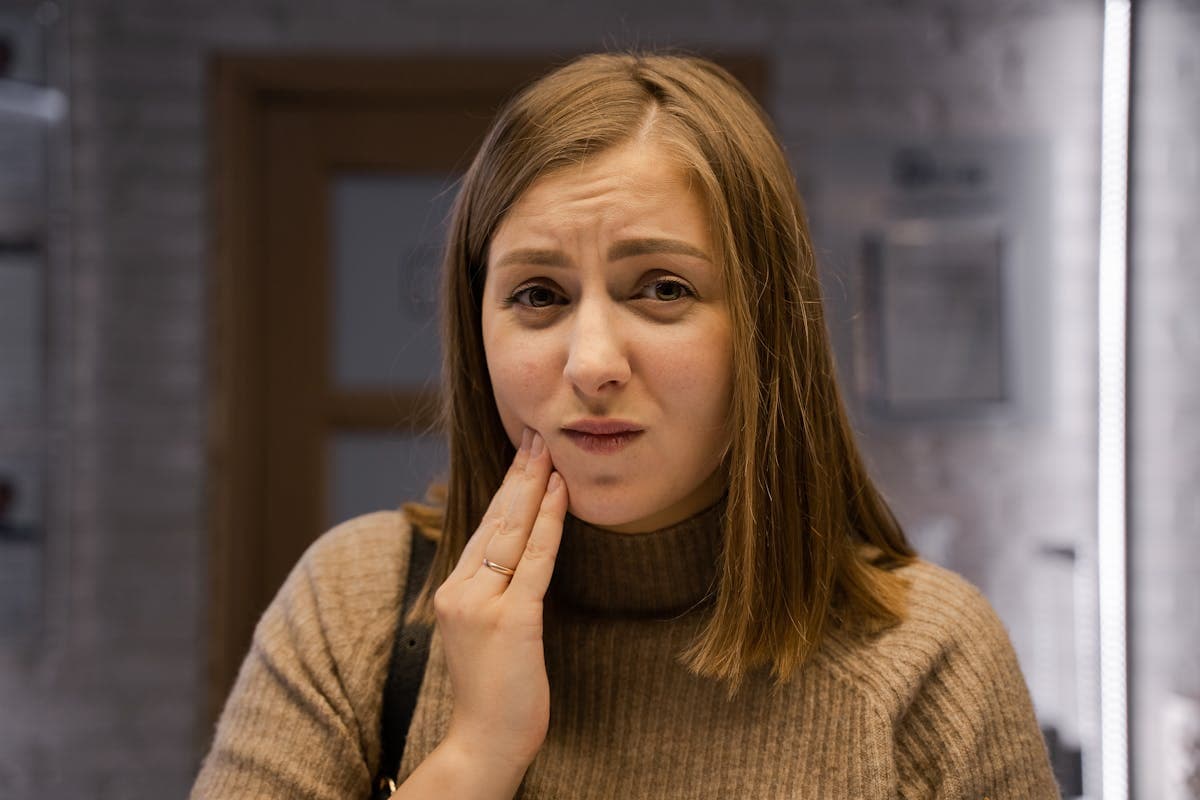
Tooth pain: painkillers before you reach the dentist
It is Friday, ten in the evening. All day you have felt a slight throbbing in one tooth, but you waved it off - it will pass. It did not pass. Now the pain is building, radiating to your ear and your jaw, and you are lying in bed counting the hours that separate you from Monday. The next free dentist appointment? Tuesday afternoon.
Do you know this feeling? Tooth pain has an exceptional talent for showing up at the worst possible moment - on a weekend, at night, while travelling. And it can be truly overwhelming: with it, eating, sleeping and concentrating on anything become difficult.
The good news is that you have real tools to get through this time in a bearable state. The bad news - and here we have to be completely honest - is that no painkiller will cure your tooth. So let us start with the most important sentence in this article.
A medication eases the symptom - only a dentist treats the cause
This sentence is worth underlining in your mind. Tooth pain almost always has a specific cause: deep tooth decay, inflammation of the pulp, a cracked crown, an abscess, a problem with the gum or with a wisdom tooth. A painkilling tablet quiets the pain signal, but it removes none of these causes.
What is more, if the pain subsides after the medication, it is easy to fall into a trap: "since it does not hurt, it must have passed on its own." It has not passed. The disease process continues, often quietly, and usually deepens. A tooth that not long ago could still have been saved with a simple treatment may, after a few weeks of delay, require a root canal treatment or extraction.
So treat painkillers solely as a bridge to the dental office - a way to get through to the appointment in bearable comfort. Make a dentist appointment as soon as possible, even if the pain has temporarily eased off. This is not a situation you can "wait out".
Ibuprofen - usually the best choice for tooth pain
Among the painkillers available over the counter, ibuprofen most often works best for tooth pain. The reason is specific: ibuprofen belongs to the group of non-steroidal anti-inflammatory drugs (NSAIDs), and tooth pain very often has an inflammatory basis. Ibuprofen not only suppresses the pain but also acts on the inflammation and swelling themselves, which drive that pain.
How to use ibuprofen
- Stick to the dosage on the package leaflet. Do not increase the dose on your own in the hope of a faster effect - that increases the risk of side effects, not the effectiveness.
- Take it after a meal or with food. NSAIDs can irritate the stomach; a full stomach reduces this discomfort.
- Use it regularly for a short time. Taking the medication at even intervals (in line with the package leaflet) works better than waiting until the pain becomes unbearable again.
When ibuprofen is not for you
Ibuprofen and other NSAIDs are not suitable for everyone. Be cautious and consult a pharmacist or doctor if you have a stomach ulcer, kidney problems, high blood pressure, asthma worsened by NSAIDs, are pregnant (especially in the third trimester) or are taking blood-thinning medication. In such situations, another medication may be safer.
Paracetamol - a good alternative when ibuprofen is off the table
The second painkiller available over the counter is paracetamol. It works against pain and fever, but - unlike ibuprofen - it has no significant anti-inflammatory effect. That is why, with typical tooth pain of an inflammatory nature, it tends to be somewhat less effective than ibuprofen.
Even so, paracetamol is a valuable option. It is particularly useful when you cannot take NSAIDs. The most important rule with paracetamol is watching the maximum daily dose: exceeding it is dangerous for the liver. Be especially careful with hidden paracetamol - it is a component of many combination preparations for colds and flu. If you take such a preparation, it is easy to unknowingly overdose on paracetamol. Read the ingredients.
Combining ibuprofen and paracetamol - when and how to consider it
When ibuprofen alone or paracetamol alone is not enough, their alternating use is sometimes considered. They are two different medications, acting in different ways, so they do not add up the risks the way two preparations from the same group do.
How much does your basket cost?
See how much your basket costs across pharmacies — free, no registration
Compare pricesBefore you reach for such a regimen, however:
- Consult it with a pharmacist. It is literally a minute of conversation at the pharmacy, and the pharmacist will help you establish safe doses and intervals and check whether there are no contraindications in your situation.
- Do not combine two medications from the same group. Ibuprofen with another NSAID (e.g. naproxen, ketoprofen or aspirin in a painkilling dose) means multiplying the risk, not strengthening the effect.
- Watch the daily doses of each medication separately. Alternating use does not exempt you from the limits - each medication still has its maximum daily ceiling.
- Treat it as a short-term solution. If the pain requires constant "topping up" with medications, that is a strong signal that the tooth urgently needs a dentist.
Numbing gels for the gums
At the pharmacy, you can also buy over the counter numbing gels applied locally to the gums and the mucous membrane of the mouth. They contain a numbing substance that quiets the sensation of pain at the application site for a certain time.
Such gels can bring temporary relief - they are sometimes helpful, for example, with an irritated gum or discomfort around an erupting wisdom tooth. They have their limits, however: they work shallowly and briefly, and with pain coming from deep within the tooth (from the pulp) they often change little. Use them in line with the package leaflet, do not exceed the recommended frequency and do not treat them as a definitive solution.
Why tooth pain tends to be worst at night
You may have noticed that a tooth that only ached slightly during the day can really flare up at night. This is neither an illusion nor bad luck. Several things come together here. First, when you lie down, more blood flows into the head, which increases the pressure in the area of the inflamed tooth. Second, during the day dozens of stimuli suppress the pain - work, conversations, the screen - and in silence and stillness attention focuses exactly on that one throbbing point. Third, the dose of medication taken in the evening has usually already worn off.
Practical conclusion: if you know a difficult night awaits you, take care in advance of even dosing of the medication in line with the package leaflet (instead of waiting until the pain wakes you up), lie down with your head raised higher and prepare a cold compress within reach. This will not cure the tooth, but it is often enough to sleep through the night and calmly make it to the appointment.
What you should absolutely never do
A fair number of "home remedies" have grown up around tooth pain that can do harm. Avoid these:
- Do not place an aspirin tablet (or any other) directly on the gum next to the aching tooth. This is a very widespread myth. The tablet will not be absorbed by this route in a way that relieves the pain, but it can instead cause a painful chemical irritation or even a burn of the mucous membrane. Painkillers work after being swallowed - take them orally.
- Do not warm up a swollen cheek. A warm compress or a hot-water bottle in the area of the swelling can intensify the inflammation and promote the spread of infection. With swelling, apply cold, not heat.
- Do not "rinse" the tooth with strong alcohol or spirits. This is another myth; it irritates the mucous membrane and does not heal.
- Do not poke at the tooth with sharp instruments. Attempts to "clean out" the cavity yourself with a needle or a toothpick risk tissue damage and infection.
- Do not ignore the pain hoping it will "pass on its own". With teeth this practically never happens - the problem deepens.
Home remedies that safely help
There are also gentle and completely safe methods you can use to support yourself between doses of medication:
- Rinsing the mouth with lukewarm salt water. Half a teaspoon of salt to a glass of lukewarm (not hot) water. Gentle rinsing cleans the area around the tooth and tends to be soothing. The water should be lukewarm - hot water can intensify the pain.
- A cold compress on the cheek from the outside. An ice pack wrapped in a cloth or a cold compress applied to the cheek (not directly on the skin) can reduce the swelling and dull the pain. Use it with breaks, for about fifteen minutes at a time.
- Avoiding factors that intensify the pain. Very cold, very hot and sweet foods often provoke the pain - for the duration of the discomfort it is better not to eat them. Also try to chew on the opposite side.
- Sleeping with a slightly raised head. A higher pillow reduces the flow of blood to the head, and the pain at night is sometimes less bothersome thanks to this.
Red flags - when it is an emergency
Most tooth pain, although very unpleasant, leaves time to make an appointment in the coming days. There are, however, symptoms with which you must not wait - they mean the infection may be spreading and urgent help is needed. Turn immediately to a dentist, to an emergency dental service or to a doctor if any of the following appears:
- Increasing swelling of the face, cheek, the area around the eye or the neck.
- Fever and general feeling of being unwell accompanying the tooth pain.
- Difficulty swallowing or breathing, a feeling of tightness in the throat.
- Difficulty opening the mouth wide (lockjaw).
- Severe, spreading pain that does not respond to painkillers.
- Discharge of purulent matter, an unpleasant taste in the mouth, clearly enlarged, painful lymph nodes.
Difficulty breathing or swallowing and a rapidly increasing swelling are an urgent situation - in that case do not wait until morning, seek help right away. Better to go once unnecessarily than to miss a serious infection.
Frequently asked questions
Is ibuprofen always better than paracetamol for tooth pain?
Often yes, because tooth pain usually has an inflammatory basis, and ibuprofen acts anti-inflammatorily. It is not suitable for everyone, however - with a stomach ulcer, kidney problems or during pregnancy, paracetamol tends to be safer. It is worth talking to a pharmacist about the choice.
Can I take ibuprofen and paracetamol at the same time for tooth pain?
They are two medications from different groups, so their alternating use is considered when one is not enough. The regimen and doses are best established with a pharmacist, watching the maximum daily doses of each medication separately. Do not, however, combine two medications from the same group (e.g. ibuprofen with aspirin).
Can I place a painkilling tablet on the aching tooth?
No. This is a myth that can do harm - a tablet placed on the gum risks chemical irritation or a burn of the mucous membrane, and it will not ease the tooth pain anyway. Painkillers are taken orally, swallowed in line with the package leaflet.
The tooth pain subsided after the medication - do I still have to go to the dentist?
Yes, absolutely. The subsiding of the pain does not mean the tooth has healed - the cause (e.g. decay or inflammation) still exists and usually deepens. The later you reach the dental office, the more extensive the treatment may be.
Does a cold or a warm compress help better for tooth pain?
A cold one. A cold compress on the cheek from the outside can reduce the swelling and dull the pain. Warming up the swollen area is not advisable - heat can intensify the inflammation.
Summary - what is worth remembering
✅ A painkiller eases the symptom but does not treat the tooth - a visit to the dentist is necessary, even when the pain eases off.
✅ Ibuprofen is usually the most effective for tooth pain, because it acts anti-inflammatorily - as long as you have no contraindications.
✅ Paracetamol is a good alternative when NSAIDs are off the table - then watch the maximum daily dose and the hidden paracetamol in other preparations.
✅ The alternating use of ibuprofen and paracetamol is worth consulting with a pharmacist - and never combine two medications from the same group.
✅ Do not place tablets on the gum and do not warm up a swollen cheek - these are myths that do harm.
✅ Rinsing with lukewarm salt water and a cold compress on the cheek are a safe support between doses of medication.
✅ Swelling of the face, fever or difficulty swallowing are an emergency - seek help immediately.
Disclaimer
This article is for educational purposes only and does not replace dental or medical advice. The choice of painkillers, their dosage and any combination are worth consulting with a pharmacist or doctor - especially if you have a chronic illness, take other medications or are pregnant. Tooth pain always requires a visit to the dentist. Swelling of the face, fever, difficulty swallowing or breathing are alarm symptoms requiring urgent help.
Tooth pain can appear out of the blue - which is why it is worth having proven painkillers in your home medicine cabinet before you urgently need them. Before you restock the medicine cabinet, add all the preparations you need to your basket on CheaperForDrug and compare its total cost across various online pharmacies - because real savings come from comparing the whole basket, not a single pack. Prepare calmly and sensibly: you will reach the dentist, and until then you can get through this difficult moment in far better shape.