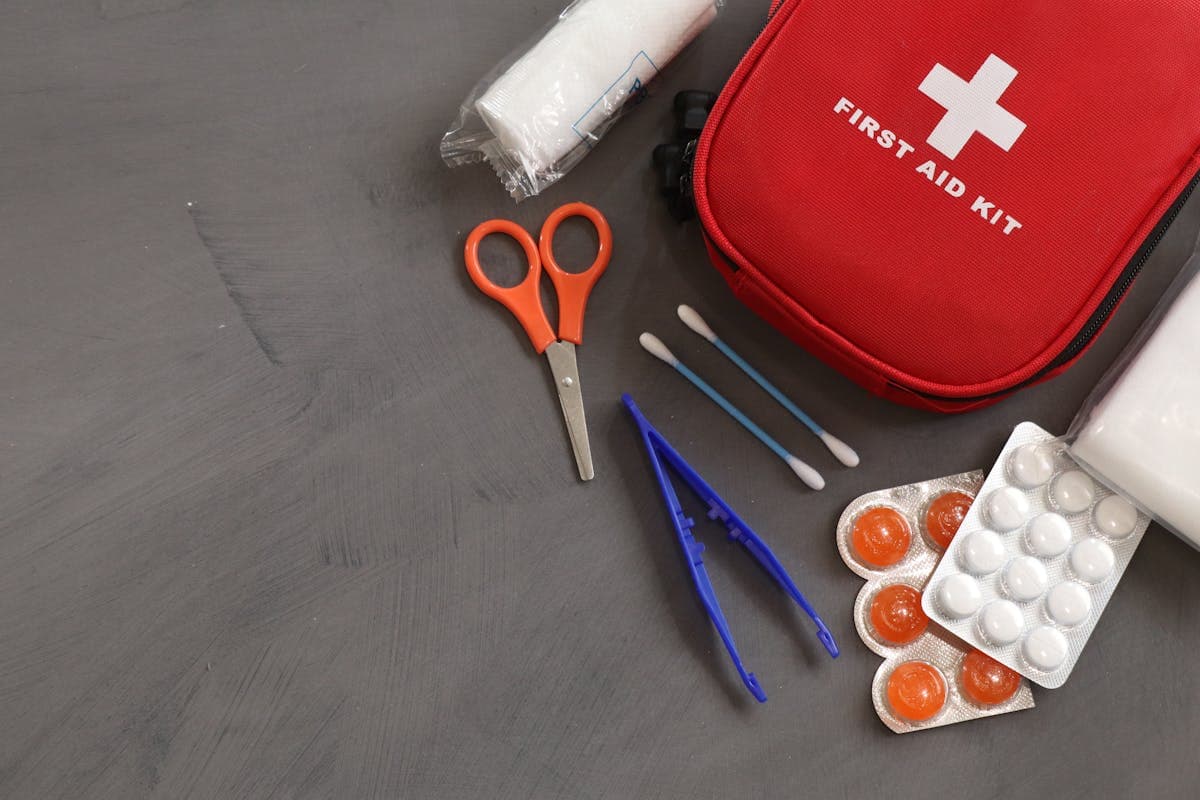
Travel first aid kit: the complete packing list without overpaying
Know the feeling? The suitcase is packed, passports checked, the sound of waves already in your head. And suddenly, the day before departure, someone says: "Did we bring the first aid kit?". So you toss a random strip of painkillers, an old plaster and some ointment that happens to be in the drawer into your bag. "It'll be fine somehow."
And then - on the second day of the holiday - your child has an upset stomach after ice cream, your partner has burnt their back in the sun, and you are wandering in 35-degree heat from pharmacy to pharmacy in a foreign city. You pay three times more for single packs than you would at home. Holiday bliss? More like holiday stress.
The good news: all of this can be avoided. All it takes is to calmly put together a travel first aid kit once - before you set off. In this article you will find a complete, practical list: what to pack, how much of it you need and how to adapt the set to the type of trip. Without overpaying and without panic.
Why is it worth putting together a travel first aid kit with care?
A travel first aid kit follows different rules than a home one. At home, if something runs out, you pop down to the pharmacy around the corner. On holiday - especially abroad or in a small town - such a "trip to the pharmacy" can mean hours of searching, a language barrier and prices that have nothing in common with the ones you know from home.
The second thing is the contents. Holiday ailments are fairly predictable: a change of water and food, heat, sun, insects, a long journey. If you know what you might face, you can prepare for exactly those situations - without taking half of your home medicine cabinet with you.
And the third, often overlooked issue - cost. Buying individual products "at the last minute", each one separately, is the most expensive possible way to put together a first aid kit. We will tell you how to do it more cheaply at the end.
The complete list: what to pack in a travel first aid kit
Let's get down to specifics. Below you will find a universal set that works for most trips. Treat it as a base - in the following sections we will show what to add for specific types of travel.
1. Painkillers and fever reducers
This is the absolute foundation of any first aid kit. A headache after a long drive, a fever, toothache, muscle aches after an active day - you can't do without it.
- Paracetamol - gentle on the stomach, good for fever and pain, can also be used in children in appropriate forms and doses.
- Ibuprofen - also works as an anti-inflammatory, useful for stronger pain and inflammation.
- If you are travelling with a child - add a children's form (syrup or suppositories) matched to their age.
It is worth having both products. They differ in how they work and can be used in different situations.
2. Products for diarrhoea and indigestion
A change of water, a different cuisine, eating in the heat - the digestive system can be capricious on holiday. This is one of the most common travel ailments.
- Anti-diarrhoeal products (e.g. with loperamide) - useful when you need to get through the return journey or a longer drive.
- Medicinal charcoal or adsorbent products - for mild indigestion and bloating.
- Products for heartburn and acid reflux - rich, unusual meals can take their toll.
- A probiotic - supports the gut flora when diet and climate change.
3. Electrolytes and rehydration
This is an item that many people forget about - and in the heat it is crucial. With diarrhoea, vomiting, intense sweating or simply in high temperatures, the body quickly loses water and mineral salts.
- Oral rehydration products (electrolytes in sachets) - you dissolve them in water, they replace what you lose with diarrhoea or dehydration.
- The sachets are light and take up little space - take a few of them, especially when travelling with children.
4. Allergy medicines
Different vegetation, pollen that does not exist in your area, insect bites, contact with new allergens - the holidays are a frequent time for unexpected allergic reactions.
- An oral antihistamine - for hay fever, hives, reactions after bites. Choose a new-generation product that causes less drowsiness.
- If someone in the family has a diagnosed allergy - take their regular medicine in an amount sufficient for the whole trip.
5. Products for motion sickness
Winding mountain roads, a ferry crossing, a long flight - if someone among the travellers tolerates journeys badly, this item saves the whole start of the holiday.
How much does your basket cost?
See how much your basket costs across pharmacies — free, no registration
Compare prices- Motion sickness tablets (e.g. with dimenhydrinate) - also available in forms for children.
- Remember: this type of product is taken in advance, before you set off, and not only when nausea appears.
6. Dressings, plasters and an antiseptic
Blisters from new shoes, cuts, minor wounds - the classics of an active break.
- Plasters in various sizes, including plasters for blisters and chafing (priceless when sightseeing).
- Sterile gauze compresses and an elastic bandage.
- An antiseptic for disinfecting wounds - preferably in spray form, convenient to use.
- Small scissors and tweezers.
7. Products for sunburn
Even careful people can overdo it with the sun on the first day. Besides a high-factor sunscreen (that is prevention) it is worth having something soothing.
- Soothing products for after sunburn - foams, gels or sprays that cool and moisturise the skin.
- Products with panthenol - they support the regeneration of irritated skin.
8. Products for insect bites
Mosquitoes, midges, wasps - a summer standard. It is worth having something with you that relieves itching and swelling.
- Gels and sticks that relieve itching after bites.
- An insect repellent as prevention - especially near water and in green areas.
- An antihistamine (the one from the allergy point) also helps with a stronger reaction to bites.
9. Your own medicines and prescriptions
If you or someone in the family takes medicines on an ongoing basis - this is the absolute priority. There is no room for improvisation here.
- Pack a supply of medicines for the whole trip plus a few days of reserve - in case of delays on the return journey.
- Take a copy of the prescription or an up-to-date list of medicines (with the names of the active substances, not just the brand names).
- Carry medicines you take regularly in your hand luggage, not in checked baggage - in case the suitcase gets lost.
A first aid kit adapted to the type of trip
The base is ready. Now let's adapt the set to how and with whom you are travelling.
Travelling by car
Travelling by car gives the most freedom - you can pack more and you don't worry about luggage limits. It is worth making use of this advantage.
- Remember that a mandatory car first aid kit is a dressing minimum - it is not the same as your travel first aid kit. Treat them as two separate sets.
- Keep motion sickness products within reach, not at the bottom of the boot.
- Watch the temperature: in summer the inside of the car heats up strongly, and high temperatures harm medicines. Do not leave the first aid kit in a hot car all day.
Travelling by plane - the liquids rule in hand luggage
This is where the most questions come up. The most important rule concerns liquids in hand luggage.
- In hand luggage, liquids, gels, creams and aerosols must be in containers of up to 100 ml, packed in one transparent, resealable bag with a capacity of up to 1 litre.
- This applies to syrups, soothing gels, sprays and liquid antiseptic products.
- Tablets and capsules are not subject to the liquids limit - you can freely take them into the cabin.
- Medicines taken regularly and products for infants are usually treated more leniently, but it is worth having a prescription or description with you - the rules vary and may change.
- If in doubt, check the current rules on the website of the airport or the airline before departure.
A practical tip: pack larger packs of liquid products (e.g. a spare syrup) in checked baggage, and take into hand luggage only what might be needed during the journey.
Travelling with children
With children the first aid kit grows - and rightly so. Little ones become dehydrated faster, tolerate the heat worse and more often have something wrong.
- Fever reducers and painkillers in children's forms - syrups, suppositories - matched to the child's age and weight.
- Electrolytes for children - an upset stomach in a small child is a situation where rehydration is really important.
- A thermometer.
- Soothing products for after bites and after the sun, intended for children.
- A high-factor sunscreen designed for children's skin.
- Plasters - preferably colourful ones, because they "magically" help with crying.
Always check on the leaflet from what age a given product can be used, and consult any doubts with a pharmacist.
Travelling abroad
A trip abroad brings a few extra issues to think through.
- Take more than usual - access to familiar products may be difficult, and brand names abroad are different.
- Write down the names of the active substances of your medicines - they are the universal ones and will help a pharmacist abroad find an equivalent.
- Check whether the medicine you are taking is legal in the destination country - some substances (even in over-the-counter (OTC) medicines) may be subject to restrictions.
- Take care of insurance and a document entitling you to healthcare (e.g. the European Health Insurance Card in EU countries).
How to put together a travel first aid kit more cheaply?
Here we get to the heart of the matter. The most expensive way to put together a first aid kit is the most intuitive one: you add individual products as you go, each bought separately, often in a rush at the first pharmacy you come across.
It is far more sensible to treat the travel first aid kit as one planned set. You write down the whole list, and then you buy it as a complete package - consciously, in advance, and not under time pressure.
Why does planning in advance pay off?
- You don't buy under pressure - you have time to compare offers and choose favourable prices instead of taking "whatever is there".
- You see the whole basket at once - it is easier to judge where the whole set comes out cheapest than to track the price of each product separately.
- You avoid holiday prices - products in tourist resorts and near airports are often noticeably more expensive.
- You won't forget anything - you put everything together in one go, according to the list.
And this is where a price comparison tool comes to the rescue. Instead of checking prices product by product in several pharmacies, you can drop the whole holiday list into one basket and compare how much this complete set costs in different pharmacies at once. The difference in the cost of the whole basket can be surprisingly large - more on that at the end of the article.
Frequently asked questions
When is the best time to put together a travel first aid kit?
Best of all 1-2 weeks before departure. You then have time to calmly compare prices, check what is missing at home, and, if needed, buy children's forms or regular medicines. Putting together a first aid kit the day before departure is the direct route to overpaying.
Can I take medicines in tablet form in hand luggage on a plane?
Yes. Medicines in solid form - tablets, capsules, coated tablets - are not subject to the liquids limit and can be freely carried in hand luggage. The 100 ml limit applies only to liquids, gels, creams and aerosols. Always put medicines you take regularly into your hand luggage.
What is not worth packing in a travel first aid kit?
There is no point in taking your whole home medicine cabinet "just in case". Skip products you do not actually use, as well as products with a short shelf life. Antibiotics are not taken on your own initiative - if a doctor has not prescribed them, they should not end up in the holiday first aid kit.
How should you store a first aid kit during the holidays?
In a dry, cool place, away from direct sun. The biggest enemy in summer is high temperature - do not leave the first aid kit in a hot car or on a beach blanket in full sun. Check on the leaflets whether any product (e.g. some probiotics) needs to be stored in the fridge.
Does a travel first aid kit differ from a home first aid kit for autumn and winter?
Yes, although some of the items overlap. The travel first aid kit places the emphasis on summer and travel ailments: sunburn, insect bites, motion sickness, travellers' diarrhoea and rehydration. The autumn-winter first aid kit focuses more on colds, coughs and sore throats.
Summary - what is worth remembering?
✅ Put together your travel first aid kit in advance - not the day before departure and not under time pressure.
✅ The base is nine groups of products - painkillers, diarrhoea relief, electrolytes, allergy, motion sickness, dressings, sunburn, insect bites and your own medicines.
✅ Adapt the set to the trip - you pack the car one way, the plane another, a trip with children or abroad another.
✅ On the plane, remember the liquids rule - containers of up to 100 ml in a transparent bag; tablets without restrictions.
✅ Medicines you take regularly are a priority - a supply for the whole trip plus a reserve, always in hand luggage.
✅ Buy the first aid kit as one planned set - it is cheaper and more reliable than buying individual products at the last minute.
✅ Compare the cost of the whole basket - look at the price of the complete set, not of individual products.
Disclaimer
This article is educational in nature and does not replace medical or pharmaceutical advice. Before using medicines - especially in children, pregnant or breastfeeding women, or people with chronic illnesses - consult a doctor or pharmacist. Always read the leaflet and check from what age and in what doses a given product can be used. The rules on carrying medicines in air luggage and on their legality in a given country may change - verify the current rules before departure.
A well-prepared travel first aid kit is peace of mind for the whole holiday - and the certainty that a minor ailment will not spoil your trip. It is best to put it together as one thought-through basket, rather than a jumble of products bought on the run. With CheaperForDrug you drop your whole holiday first aid kit into one basket and compare how much this complete set costs across various online pharmacies at once. Because real savings come from comparing the WHOLE basket - not a single plaster or strip of tablets. Plan your first aid kit calmly, compare the whole set and set off on holiday without overpaying. Have a great trip!