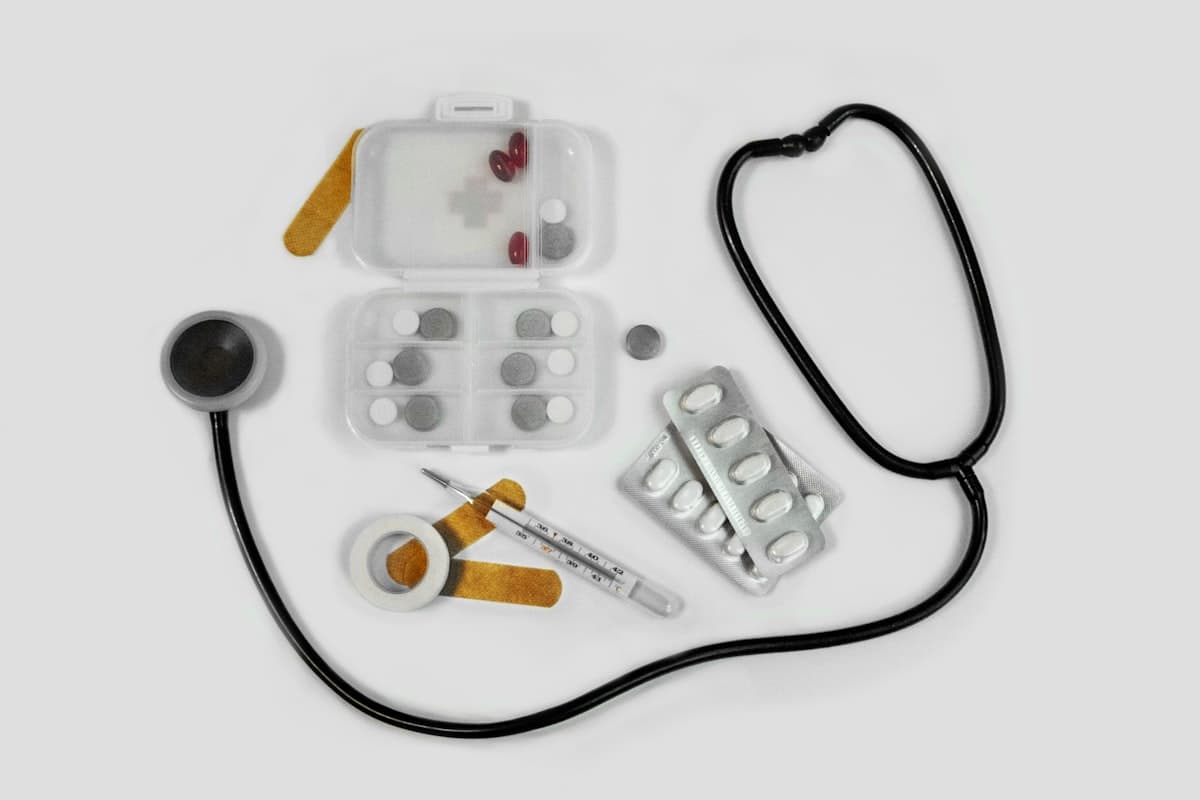
A Minimalist Home Medicine Cabinet for Autumn and Winter - What Do You Really Need?
You know what always fascinates me? How we manage to fill our home medicine cabinets with dozens of products, most of which we never use. And then, when something actually bothers us, we can't find what we're looking for anyway.
Today I want to show you that a medicine cabinet for the autumn-winter season doesn't have to resemble a small pharmacy. A dozen or so well-chosen products that will genuinely help you when needed are quite enough. Without overspending, without panic, and without unnecessary clutter.
Why think about a medicine cabinet now?
Autumn and winter are when our bodies have a harder time. Shorter days, less sunshine, more time spent in enclosed, heated rooms full of viruses. It's not about scaring yourself - it's about being prepared.
When a headache strikes in the middle of the night, or when your child wakes up with a fever, you really don't want to be searching for an all-night pharmacy. A well-stocked, minimalist medicine cabinet is simply peace of mind.
The philosophy of a minimalist medicine cabinet
Before we get into specifics, let's establish the ground rules. A minimalist medicine cabinet isn't an "overflowing basket for every possible scenario." It's a set of proven products that:
- Cover the most common winter ailments
- Are universal and work for the whole family (accounting for age)
- Have a long shelf life
- Have actually been used by you at least once
If something has sat in your medicine cabinet untouched for three years - you probably don't need it.
What should be in your autumn-winter medicine cabinet?
1. Fever reducer and pain reliever
This is an absolute must. And there's no need to overthink it - you need one good product based on paracetamol or ibuprofen.
Paracetamol (e.g. generic paracetamol brands)
- Price: from €2-4 per pack
- For whom: adults, children (in appropriate doses/forms)
- When: fever, headache, muscle aches
Ibuprofen (e.g. Nurofen, generic ibuprofen)
- Price: from €2-5
- For whom: adults, children over 6 months of age
- When: fever, inflammation, stronger pain
My advice? Keep both at home. Paracetamol is gentler on the stomach, ibuprofen works better as an anti-inflammatory. And if you have children, remember to stock children's forms - syrups or suppositories.
2. Thermometer
It may not be a "medicine," but without one it's hard to tell if you actually have a fever. An electronic thermometer costs about €4-8 and lasts for years.
3. Cold remedies
Here's a heads-up - you don't need ten different cold powders. Most of them are a combination of paracetamol with vitamin C and pseudoephedrine. Often, taking paracetamol separately with rest works better.
But if you like hot supportive drinks, choose one tried and tested option:
A hot drink cold remedy (e.g. Lemsip, Coldrex)
- Price: about €4-6 per pack
- When: cold symptoms with nasal congestion and aches
Don't stockpile five different types - one will do.
4. Nasal drops or spray
A blocked nose can really make life miserable, especially at night.
How much does your basket cost?
See how much your basket costs across pharmacies — free, no registration
Compare pricesDrops with xylometazoline (e.g. Otrivin, generic xylometazoline)
- Price: €2-4
- Warning: don't use for more than 5-7 days!
Saline solution or sea water spray (e.g. Physiomer, Humer)
- Price: €3-5
- Safe for children and for long-term use
My recommendation? Always have saline - it's the safest option for the whole family. You can pick up decongestant drops when things really get tough.
5. Throat lozenges
A scratchy, sore throat is a classic autumn complaint. You don't need five different types of lozenge.
Strepsils, Septolete, or Isla-Moos
- Price: €3-5
- Choose one brand that suits you
Isla-Moos (Icelandic moss extract) is particularly nice for people who don't like a strong medicinal taste.
6. Cough syrup
Here comes the dilemma: dry or productive cough? For a minimal medicine cabinet, you can have one universal herbal syrup.
Herbion (pelargonium or plantain)
- Price: €4-6
- Helps with various types of cough
Alternatively: Ambroxol
- Price: €3-5
- Thins mucus, makes it easier to cough up
If someone in the household tends to have persistent coughs, it's worth having one good syrup. If not - you can pick one up if needed.
7. Probiotic
Especially if someone in the family is going to take antibiotics - a probiotic supports rebuilding the gut flora.
A quality probiotic supplement
- Price: €6-10
- Store in the fridge (most probiotics require refrigeration)
This isn't an absolutely essential item, but if you have children or fall ill frequently - it's worth having.
8. Plasters, gauze, dressings
Autumn also means slipping on wet leaves, scrapes, minor cuts.
Basic set:
- Plasters in various sizes (€2-4)
- Sterile gauze pads (€2-3)
- Elastic bandage (€2-4)
- Burn dressing (optional, €3-5)
9. Disinfectant
Octenisept or a standard chlorhexidine-based product
- Price: €3-5
- For disinfecting wounds and scratches
You can also have a regular hand sanitiser - useful for more than just wounds.
10. Vitamin D
This isn't an "emergency medicine," but in the European climate, especially in winter, vitamin D supplementation is simply common sense.
Vitamin D3 (e.g. Vigantol, or any reputable brand)
- Price: €3-5 for a pack lasting 2-3 months
- For whom: everyone, all year round (especially from October to March)
Additional items for families with children
If you have little ones, also consider:
- Teething gel (Dentinox, Calgel - €4-6)
- Simeticone drops for colic (Infacol, Espumisan Baby - about €6)
- Nasal aspirator (€4-8) - invaluable for infants
How to store your medicine cabinet?
Best in a dry, cool place, away from direct sunlight. The bathroom is paradoxically one of the worst places - humidity shortens the shelf life of medicines.
A few practical tips:
- Check expiry dates every six months (I always do it at the start of April and October)
- Keep leaflets with the medicines - they really come in handy in stressful situations
- Clearly mark medicines for adults and for children
- Store the cabinet out of children's reach, but somewhere you have quick access
What not to stockpile?
There are a few things that sound sensible but rarely prove useful in a home medicine cabinet:
- Antibiotics - don't self-medicate, always after a doctor's consultation
- Lots of different supplements - choose 2-3 proven ones, the rest is usually money down the drain
- Prescription medications "just in case" - if your doctor hasn't prescribed them, you shouldn't have them
- Products with short shelf lives - buy these when they're actually needed
How much does it all cost?
A complete, minimalist autumn-winter medicine cabinet costs around €40-60. That's really not much, especially since most products will last the whole season, and some even longer.
And if you want to save even more? Check prices on CheaperForDrug before you buy. The differences between pharmacies can be significant - sometimes as much as 30-40% on the same product. A few minutes of comparing prices can save you quite a bit.
When is a home medicine cabinet not enough?
Always remember - a home medicine cabinet is support for mild ailments, not a substitute for a doctor's visit. See a doctor when:
- A fever lasts more than 3 days or exceeds 39°C (102°F)
- Shortness of breath or chest pain appears
- Cold symptoms don't subside after a week or get worse
- A child shows worrying symptoms (lethargy, vomiting, rash)
- You're unsure whether it's "just a cold"
Don't be afraid to consult - it's better to ask once too many than to miss something serious.
Summary - your shopping list
If you're starting from scratch, here's a specific list for the pharmacy:
- Paracetamol or Ibuprofen (adults + children, if applicable)
- Thermometer
- Cold remedy (optional)
- Nasal drops/spray (saline + xylometazoline)
- Throat lozenges
- Cough syrup (optional)
- Probiotic (optional)
- Plasters, gauze, bandage
- Disinfectant
- Vitamin D3
The whole lot will easily fit in one small box or basket. Simple, concrete, without overspending.
A final thought
Minimalism in your medicine cabinet isn't stinginess or recklessness. It's simply a smart approach - having what actually works and what you'll actually use. You don't need a medicine for every conceivable ailment. You need solid basics that will help you get through autumn and winter without major drama.
And remember - the best medicine cabinet is the one you... barely have to use. Take care of yourself, dress in layers, wash your hands, air out your home, and sleep enough. These are simple things, but they really work.
Here's to a healthy winter!
Disclaimer: This article is educational in nature and does not constitute medical advice. Always consult a doctor or pharmacist before using medicines, especially for children, pregnant women, or those with chronic conditions. When in doubt - ask a specialist.
Looking for the best prices on medicines from this list? Check CheaperForDrug and compare prices at pharmacies. Save smartly!